

Eight inches equals 20.32 centimeters, or about the length of a standard dinner knife laid flat on a table. It’s a size you run into constantly without noticing — kitchen tools, electronics, packaging, even parts of your own hand land close to this mark. This guide breaks down exactly what 8 inches looks like, how it converts across units, and how to estimate it accurately when you don’t have a tape measure handy.
What Does 8 Inches Actually Look/Feel Like?
Picture two standard dollar bills laid end to end with a little overlap — that gets you close to 8 inches. It’s longer than a smartphone but shorter than a standard sheet of printer paper turned sideways. Held horizontally, 8 inches spans roughly the width of a large adult hand stretched from thumb to pinky.
In practical terms, 8 inches sits in an awkward middle zone: too long to call “small,” too short to call “long.” It’s the size of things designed to be gripped, held, or handled at close range — think handheld tools, personal electronics, and tabletop items rather than furniture or room-scale objects.
8 Inches in Different Units (Conversion Table)
To convert 8 inches to centimeters, multiply by 2.54 (the number of centimeters in one inch). That calculation gives you 20.32 cm, and the same multiplication logic applies whether you’re converting to millimeters, feet, or meters.
| Unit | Value |
| Inches | 8 in |
| Centimeters | 20.32 cm |
| Millimeters | 203.2 mm |
| Feet | 0.667 ft (⅔ ft) |
| Yards | 0.222 yd |
| Meters | 0.2032 m |
Quick formula reference:
- Inches → cm: multiply by 2.54
- Inches → mm: multiply by 25.4
- Inches → feet: divide by 12
Why 8 Inches Is So Common in Everyday Life
Eight inches shows up so often because it lands at the sweet spot of ergonomic design — long enough to be functional, short enough to fit in a hand, bag, or drawer without wasted space. Manufacturers gravitate toward this length for handheld tools and tabletop items because it matches average adult grip span and desk-scale proportions.
Kitchenware is a good example. Cutlery, small pans, and utensils cluster around 7 to 9 inches because that range suits how a hand closes around a handle. The same logic applies to personal care items, office tools, and small electronics — 8 inches is close to the natural “one-hand” limit before an object starts requiring two hands or extra effort to use comfortably.
21 Everyday Things That Are 8 Inches Long (With Examples)
Standard dinner knife

A typical dinner knife measures close to 8 inches from handle tip to blade tip, making it one of the most reliable everyday references for this length. Next time you set a table, measure one — most fall between 8 and 9 inches.
Butter knives and steak knives run slightly shorter or longer, so the plain dinner knife is the cleanest benchmark if you’re trying to eyeball the measurement in a pinch. Restaurant flatware tends to stick closer to this size than novelty or oversized cutlery sets, which is part of why it’s such a dependable reference.
Small kitchen spatula
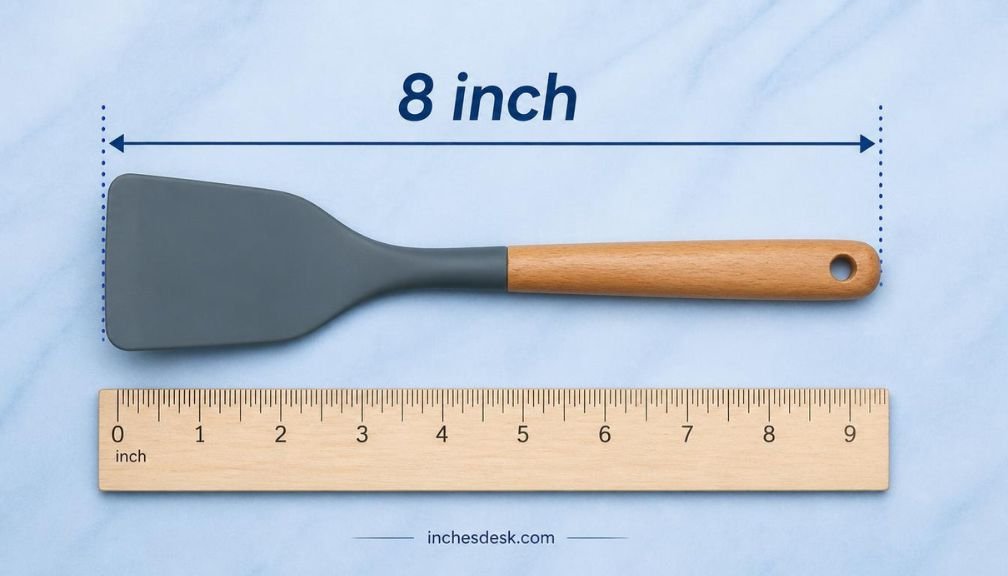
Compact spatulas used for flipping eggs or small pancakes usually run around 8 inches total, balancing enough handle length for control with a blade small enough for tight pan space.
Anything shorter starts to feel cramped in a standard skillet, while anything longer becomes awkward for delicate flipping. Silicone-headed versions and metal turners both tend to cluster in this range, which is why it’s one of the most-reached-for tools in a typical kitchen drawer.
Desk Organizer Tray

Compact desk trays designed to hold pens, sticky notes, or paperclips are frequently built around 8 inches in length, sized to fit neatly along the back edge of a standard desk without crowding a keyboard.
This size hits a practical sweet spot — long enough to divide into two or three small compartments, but short enough to sit within easy arm’s reach without becoming a shelf unto itself. It’s also a common size for stackable organizers meant to fit inside a single desk drawer.
Pencil
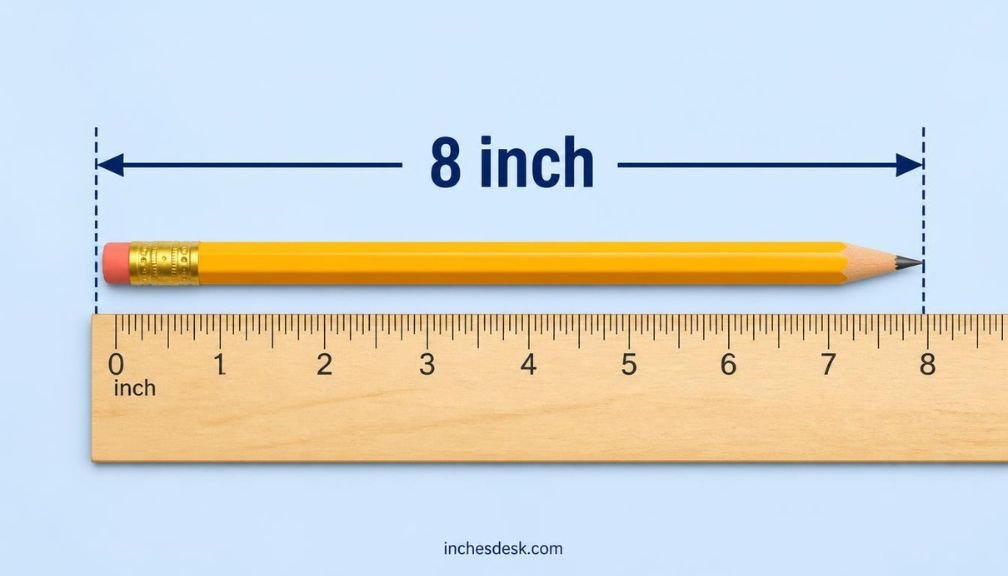
An unsharpened standard pencil measures almost exactly 7.5 inches, and once you factor in typical sharpening wear over its lifespan, it spends a good portion of its life right around 8 inches.
This has stayed remarkably consistent for over a century, since pencil manufacturing settled on this length as an efficient use of raw wood stock while still giving a comfortable amount of grip room. It’s one of the few everyday objects whose size hasn’t shifted with modern redesigns.
Toothbrush

Most adult toothbrushes measure between 7.5 and 8 inches, a length chosen so the handle extends comfortably past a closed fist for leverage while brushing.
Children’s toothbrushes are noticeably shorter to match smaller hands, which is a quick way to tell the two apart on a crowded bathroom shelf. Electric toothbrush handles vary more, but manual brushes have stayed close to this length for decades.
Eyeglasses case

Hard-shell glasses cases are commonly built to about 8 inches long, giving enough clearance to slide frames in and out without cramming the hinges.
Soft pouch-style cases can run a bit shorter since they flex around the shape of the glasses, but rigid clamshell cases almost always land near this length to accommodate wider or larger frame styles without forcing them in at an angle.
TV remote control

Many standard television remotes, especially older or universal models, measure close to 8 inches — long enough to house a full button layout while still fitting a couch-side hand comfortably.
Slimmer modern smart-TV remotes with fewer buttons have trended shorter, but full-function remotes with numeric keypads and menu controls still tend to need close to 8 inches of surface area to lay everything out without crowding.
Small ruler
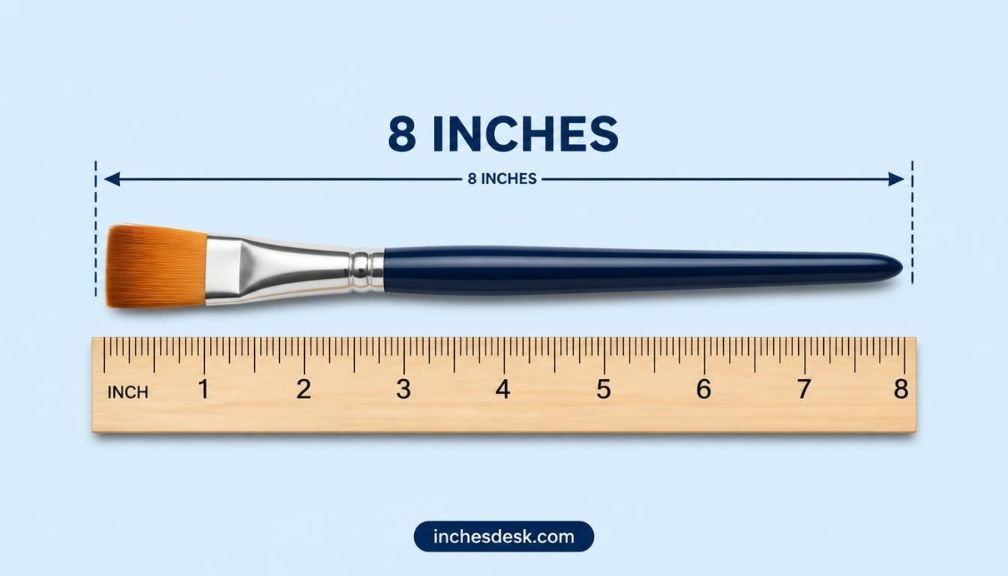
While the classic school ruler is 12 inches, many compact or “half-size” rulers sold for pencil cases and toolkits measure right around 8 inches.
These shorter rulers are popular for sewing kits, art supply boxes, and travel-sized stationery sets, where a full 12-inch length would be awkward to store. Ironically, an 8-inch ruler is one of the few objects on this list that can measure itself exactly.
Paperback book height

A large number of mass-market paperback novels stand about 7 to 8 inches tall, a format publishers settled on decades ago for easy handling and shelf storage.
This size traces back to printing and paper-cutting standards from the mid-20th century, and it’s stuck around because it fits comfortably in one hand for reading while still leaving enough page space for reasonable font sizes.
Dinner fork
Like its knife counterpart, a standard dinner fork typically measures close to 8 inches, keeping the full cutlery set visually and functionally matched.
Salad forks and dessert forks are built noticeably shorter, so if you line up a full flatware set by size, the dinner fork and dinner knife are usually the two longest pieces, sitting right around the same 8-inch mark.
Hairbrush
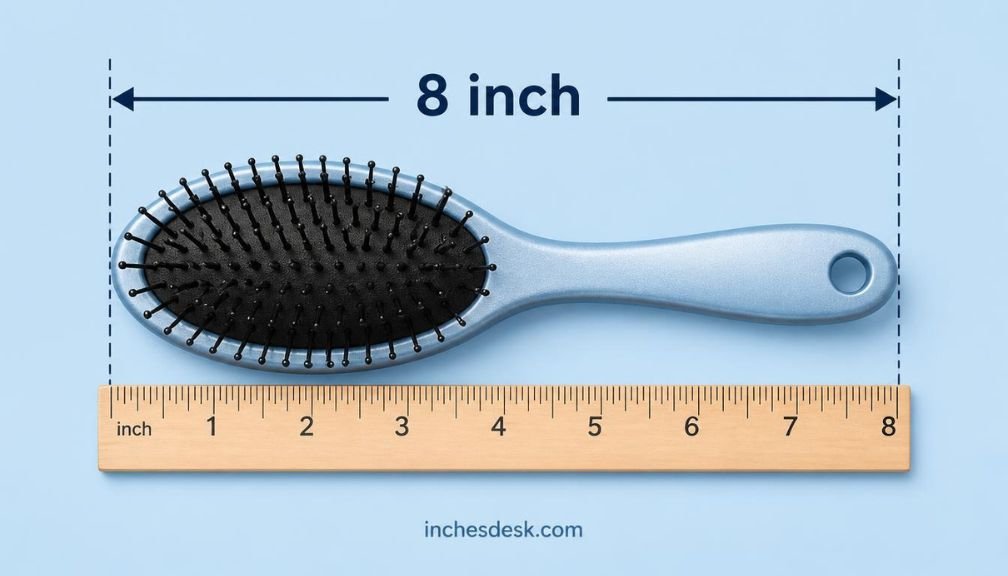
Paddle brushes and standard round brushes often land near 8 inches including the handle, long enough to reach through hair in one motion without excessive wrist movement.
Travel-sized brushes are deliberately shorter to fit in a bag, which makes the 8-inch full-size brush the more useful reference if you’re picturing the version that normally sits on a bathroom counter.
Spoon
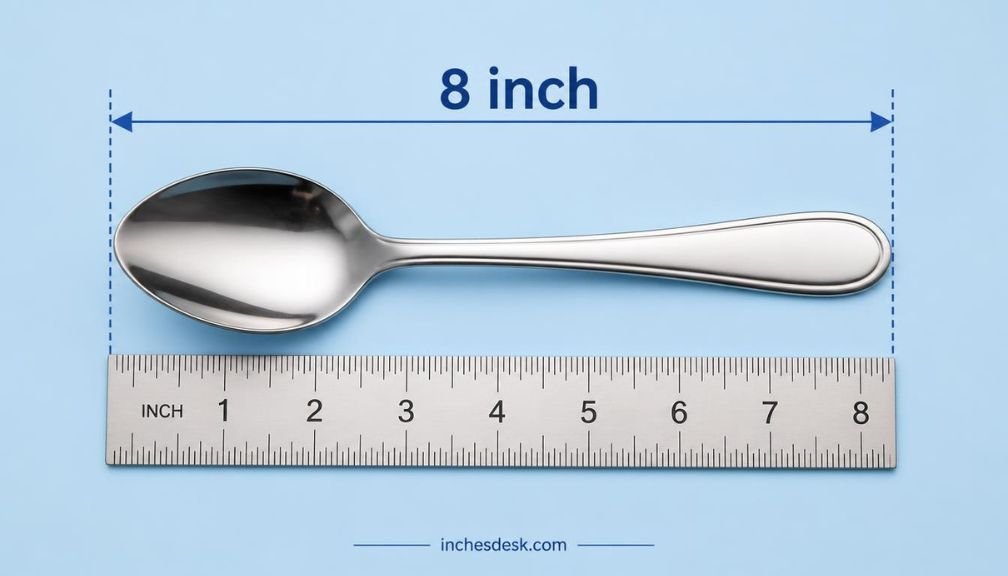
A tablespoon-style serving or dinner spoon frequently measures around 8 inches, following the same handle-length logic as forks and knives.
Teaspoons and dessert spoons are shorter, so a full spoon drawer usually shows a clear size gradient, with the largest serving spoons landing closest to — or occasionally just past — the 8-inch mark.
Small flashlight
Compact handheld flashlights, especially the classic cylindrical style carried in a glove box or junk drawer, commonly measure around 8 inches.
This length is long enough to hold two or three standard batteries end to end while still fitting comfortably in one hand, which is why it’s remained a popular size for basic household and emergency flashlights.
Hair straightener

Many flat irons measure close to 8 inches long from the tip of the plates to the end of the handle, a size that balances control with portability.
Professional salon models can run a bit longer for extra leverage, but consumer versions sold for home use tend to stay close to 8 inches so they’re easier to store in a drawer or travel bag.
Small notebook
Pocket-to-mid-size notebooks, larger than a true pocket notepad but smaller than a standard composition book, often measure about 8 inches tall.
This size is popular for journals and sketchbooks because it offers enough page area for writing or drawing while still fitting inside most bags without adding much bulk.
Sewing scissors
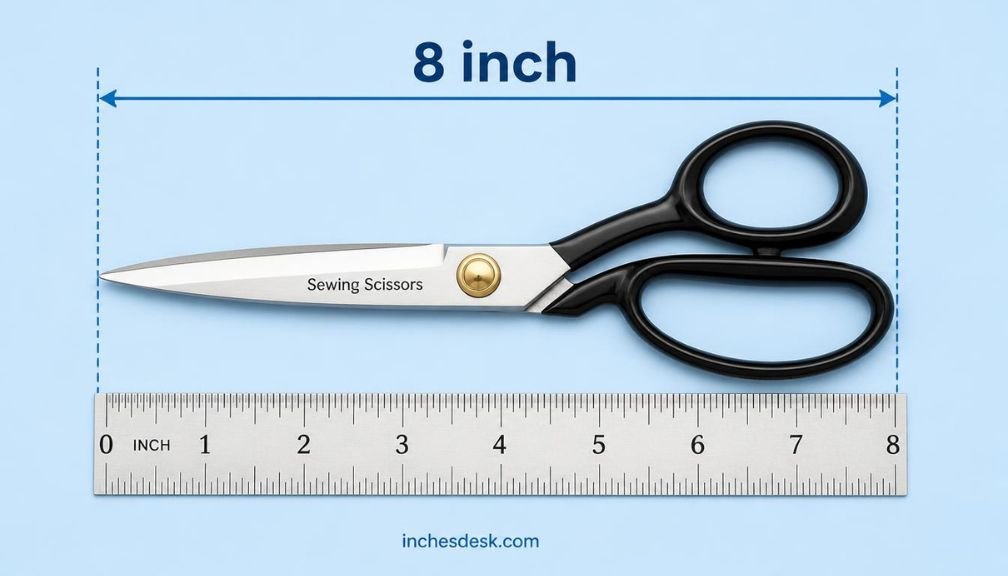
Dedicated fabric or sewing scissors are frequently sized around 8 inches, longer than craft scissors for cleaner, longer cutting strokes through fabric.
The extra length compared to household scissors reduces the number of cuts needed across a long seam line, which is part of why tailors and hobbyists alike tend to reach for the 8-inch size specifically for fabric work.
Yoga Block
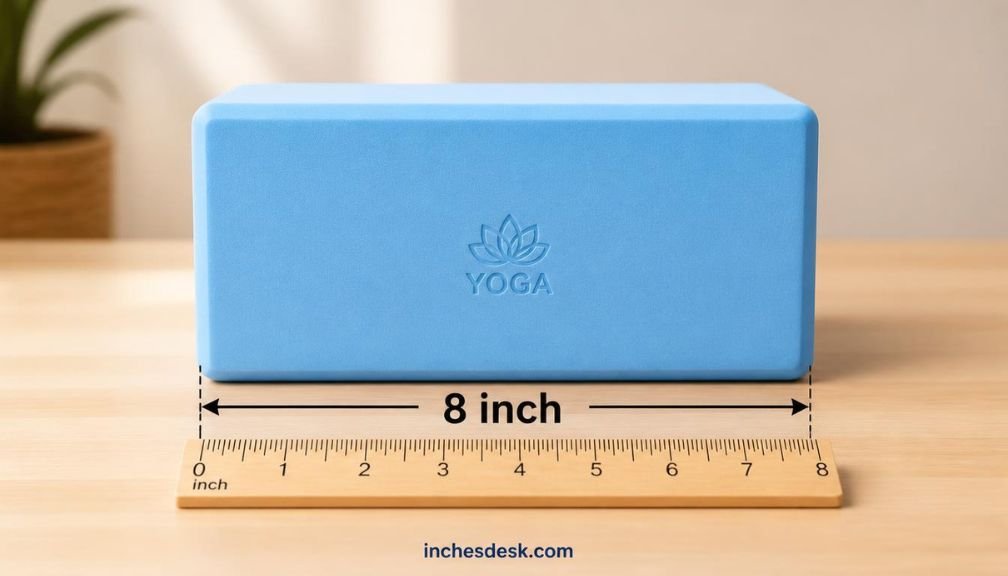
A standard yoga block measures 9 x 6 x 4 inches, and when a block is turned on its long edge, that dimension sits just past 8 inches — close enough that many people use it as a mental reference for the measurement.
Cork and foam versions are built to the same standard dimensions, so regardless of material, tipping a block onto its shorter upright side gets you closest to a true 8-inch reference.
8-Inch Cake Pan
This one is exact by definition: an 8-inch round cake pan measures 8 inches across the inside diameter, one of the two most common home baking pan sizes alongside the 9-inch.
The difference between the two sizes matters more than it looks — swapping one for the other in a recipe changes batter depth and baking time, which is why bakers often keep both sizes on hand.
Small Pizza
A “personal” or small pizza is typically cut from an 8-inch base, roughly the size of a dinner plate, distinguishing it from the 10 to 12-inch medium sizes.
This size is common in single-serving frozen pizzas and personal-pan restaurant options, since it’s large enough to feel like a full meal without requiring the extra dough and toppings of a shareable pie.
Tablet Size
Compact tablets are commonly measured by screen diagonal, and 8-inch tablets form their own popular category — smaller and lighter than the standard 10-inch models, closer in feel to a large paperback.
This size has stayed popular for e-readers and travel tablets specifically because it’s light enough to hold one-handed for long stretches, unlike larger 10 to 12-inch models.
Banana (medium)
A medium banana measures roughly 7 to 8 inches from tip to tip, which is why bananas are one of the most commonly cited natural, everyday reference objects for this length.
Because bananas are sold and eaten everywhere, nutrition labels and recipes often use “one medium banana” as a built-in size reference — and that reference lines up almost exactly with 8 inches.
How Long Is 8 Inches Compared to Your Hand?
For most adults, 8 inches is close to a full hand span — the distance from the tip of the thumb to the tip of the pinky when the hand is stretched out flat. Average adult hand spans run between 7 and 9 inches, which puts 8 inches right in the middle of the typical range.
This makes your own hand a genuinely useful field measuring tool. Stretch your hand as wide as it goes, measure that span once with an actual ruler, and you’ll know instantly whether your personal “hand span” runs a little short of, right at, or a little past 8 inches — a reference you’ll carry with you forever.
How to Measure 8 Inches Without a Ruler
You can estimate 8 inches accurately using common objects with known, fixed sizes as stand-ins for a measuring tape. The method is simple: pick a reference object of known length, lay it against what you’re measuring, and add or subtract based on the difference.
Reliable reference objects for 8 inches:
- A standard dollar bill is 6.14 inches long — add roughly two extra finger-widths to reach 8 inches.
- A credit card is 3.37 inches — two credit cards laid end to end come close to 6.75 inches, needing about one more inch.
- An average adult hand span (thumb to pinky, stretched) is close to 8 inches for most people.
- A standard smartphone (without case) commonly measures around 5.5 to 6.5 inches, so add roughly 1.5 to 2.5 inches.
Step-by-step estimation method:
- Choose one reference object with a length you already know precisely.
- Place it flush against the starting edge of the object you’re measuring.
- Note the shortfall or excess in inches.
- Add or subtract that difference to estimate the total length.
- Repeat with a second reference object to cross-check your estimate.
Fun Facts About 8 Inches
- Eight inches is exactly two-thirds of a foot, which is why it converts to a clean 0.667 ft.
- The 8-inch cake pan predates the 9-inch pan in most vintage American recipes, meaning older recipes often assume the smaller size by default.
- In the world of vinyl records, an 8-inch disc briefly existed as a novelty format in the 1950s before the industry settled on 7-inch and 12-inch standards.
- Early tablet computers used an 8-inch screen as a deliberate middle ground between phone-sized and full 10-inch tablets, a category that still exists today.
- A sheet of standard printer paper (8.5 x 11 inches) is only half an inch wider than 8 inches, making it one of the closest everyday matches to this length.
8 Inches Quick Quiz (Test Yourself)
Test how well you’ve internalized this measurement before checking the answers below.
- How many centimeters are in 8 inches?
- Is 8 inches longer or shorter than a standard smartphone?
- What fraction of a foot is 8 inches?
- Name two kitchen utensils close to 8 inches long.
- What’s a quick way to estimate 8 inches using your hand?
Answer key:
- 20.32 cm
- Longer than most smartphones (typically 5.5–6.5 inches)
- Two-thirds (⅔) of a foot
- A dinner knife and a dinner fork
- Stretch your hand from thumb tip to pinky tip — for most adults, that’s close to 8 inches
Final Thoughts
Eight inches is one of those measurements that’s easier to recognize than to picture from the number alone. Once you connect it to a few fixed reference points — a dinner knife, a hand span, an 8-inch cake pan — you’ll start spotting it everywhere, from the kitchen drawer to the electronics aisle.
The exact conversion, 20.32 cm or 203.2 mm, is worth memorizing if you deal with measurements regularly, but the everyday comparisons above are usually the faster way to get a feel for the size in the moment.
FAQs
How long is 8 inches in cm?
Eight inches equals 20.32 centimeters exactly. You get this by multiplying 8 by 2.54, the fixed conversion rate between inches and centimeters.
What common objects are exactly 8 inches?
An 8-inch cake pan is exact by definition, measuring 8 inches across its inside diameter. Small pizzas, dinner knives, and dinner forks also commonly land right around this length.
How do I measure 8 inches without a ruler?
Use a known reference object like a credit card (3.37 in) or dollar bill (6.14 in) and add the remaining distance by eye, or stretch your hand span, which averages close to 8 inches for most adults.
Is 8 inches bigger than a standard ruler?
No. A standard ruler measures 12 inches, so 8 inches covers about two-thirds of its total length, stopping a few inches short of the far end.
What household items are 8 inches?
Common household examples include a small kitchen spatula, a hairbrush, a flashlight, a hair straightener, and a small notebook — all clustered around this length for comfortable one-hand use.
