

If you’ve ever stared at a tape measure and wondered how long is 5 inches actually feels in real life, you’re not alone. Numbers on a ruler don’t mean much until you connect them to something you can picture — a soda can, a highlighter, the width of your palm. This guide does exactly that: it breaks 5 inches down into simple conversions, hand-measuring tricks, and 15 objects you probably have within arm’s reach right now.
How Long Is 5 Inches, Exactly?
5 inches equals 12.7 centimeters, 127 millimeters, or 0.417 feet. It’s just over four-fifths the length of a standard No. 2 pencil and roughly the height of a smartphone lying on its side. Picture two U.S. dollar bills laid end to end and slightly overlapped — that’s close to 5 inches.
5 Inches in Different Units
Converting 5 inches into other units is simple once you know the multipliers. To convert inches to centimeters, multiply by 2.54. To convert inches to millimeters, multiply by 25.4. To convert inches to feet, divide by 12.
| Unit | Value |
| Inches | 5 in |
| Centimeters | 12.7 cm |
| Millimeters | 127 mm |
| Feet | 0.417 ft |
| Yards | 0.139 yd |
| Meters | 0.127 m |
These figures are exact conversions, not estimates, so you can use them for anything from a school assignment to a DIY cut list.
What Does 5 Inches Look Like on Your Hand?
On an average adult hand, 5 inches stretches from the wrist crease to just past the fingertips, or roughly the full width of a spread-out palm from thumb tip to pinky tip. Hand size varies by person, so this is a rough guide rather than a precise tool, but it’s useful when you need a fast estimate and no ruler is in sight.
A few more hand-based reference points that tend to land close to 5 inches:
- The length of an average adult index finger plus about half the thumb
- The distance from the base of the palm to the tip of the middle finger for many adults
- Two finger-widths stacked with a thumb’s width added on top
If you want a more personal reference, measure your own hand once with an actual ruler and remember the number — your hand becomes a built-in measuring tool for life.
15 Everyday Objects That Are About 5 Inches Long
Each object below is one you can picture instantly, which makes 5 inches easier to internalize than any abstract number on its own. Where it’s useful, we’ve also noted what to watch out for, since not every version of an object matches the size exactly.
Highlighter Marker

A standard highlighter marker measures almost exactly 5 inches from cap to tip. It’s one of the most reliable references because the size has stayed consistent across brands for decades — grab one from a desk drawer and you’re holding 5 inches in your hand.
This makes highlighters a genuinely practical measuring stand-in in a pinch. If you’re sketching a layout, checking whether an object will clear a shelf gap, or just want a fast sanity check on a listed dimension, laying a highlighter next to it gets you remarkably close without ever touching a tape measure. Chisel-tip and fine-tip versions from most major office-supply brands (Sharpie, BIC, Stabilo) tend to cluster within a few millimeters of each other, so the comparison holds up regardless of which one happens to be in your drawer.
Standard Soda Can
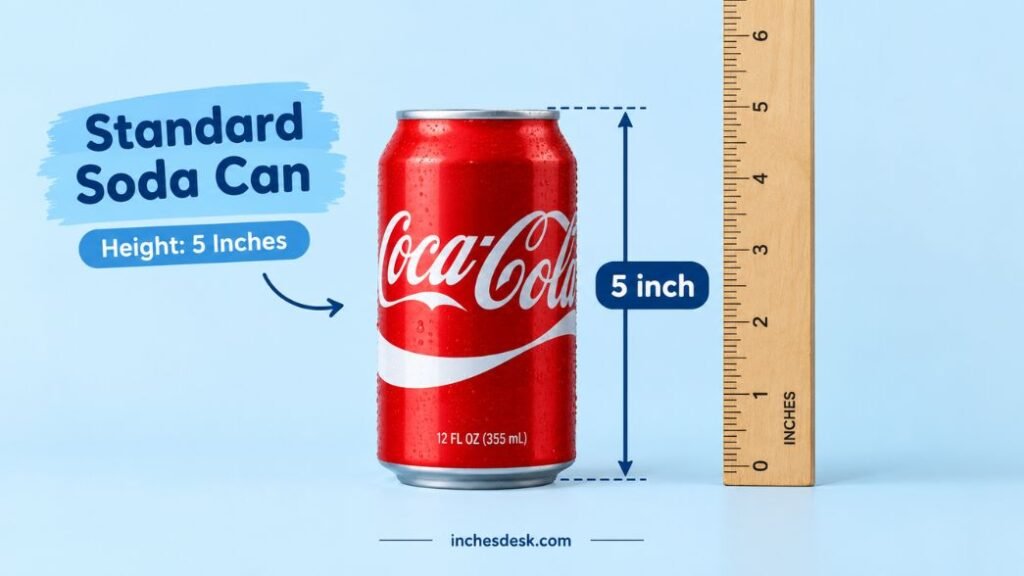
A 12-ounce aluminum soda can stands about 4.8 inches tall, just shy of the full 5-inch mark. Set one on a table and add roughly the thickness of two stacked coins on top, and you’ve mentally reached 5 inches.
Soda cans work well as a reference specifically because the format is standardized across nearly every major beverage brand worldwide, from soft drinks to sparkling water to energy drinks. That consistency means you don’t need to check the brand — a can from any grocery store shelf will land in the same narrow height range, making it one of the most universally available comparison objects on this list.
Half a Wooden Chopstick
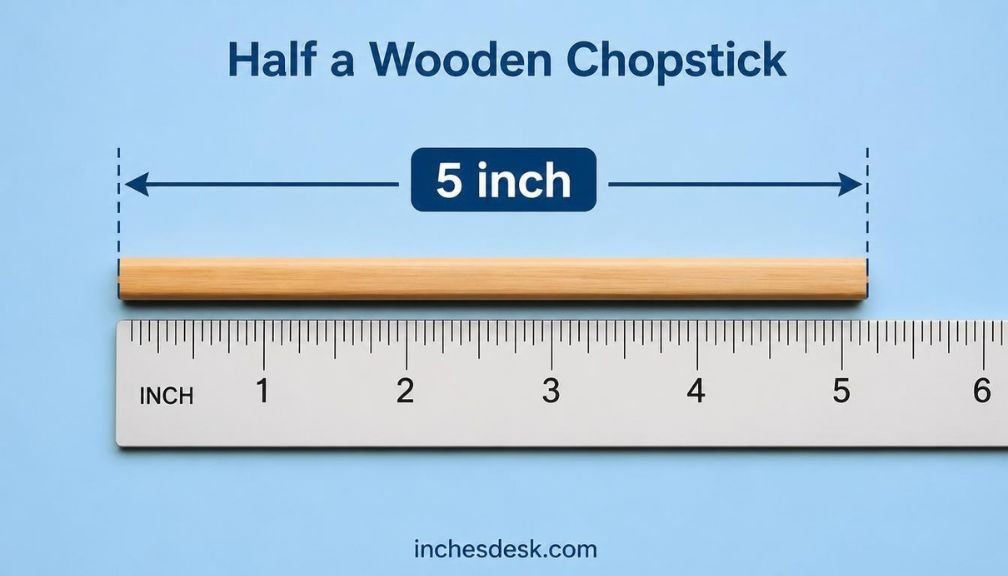
A full wooden chopstick usually runs about 9 to 10 inches long. Snap or picture one broken exactly in half, and each piece lands close to 5 inches. It’s a handy trick if you happen to have takeout chopsticks nearby and nothing else to measure with.
This comparison is especially useful because disposable wooden chopsticks are one of the few free, disposable items people are likely to have multiples of in a kitchen drawer. If precision matters, measure a full chopstick first, since lengths do vary slightly by manufacturer — some run closer to 9 inches, others closer to 10.5 — and halve that number rather than assuming a fixed length.
Pocket/Travel Comb
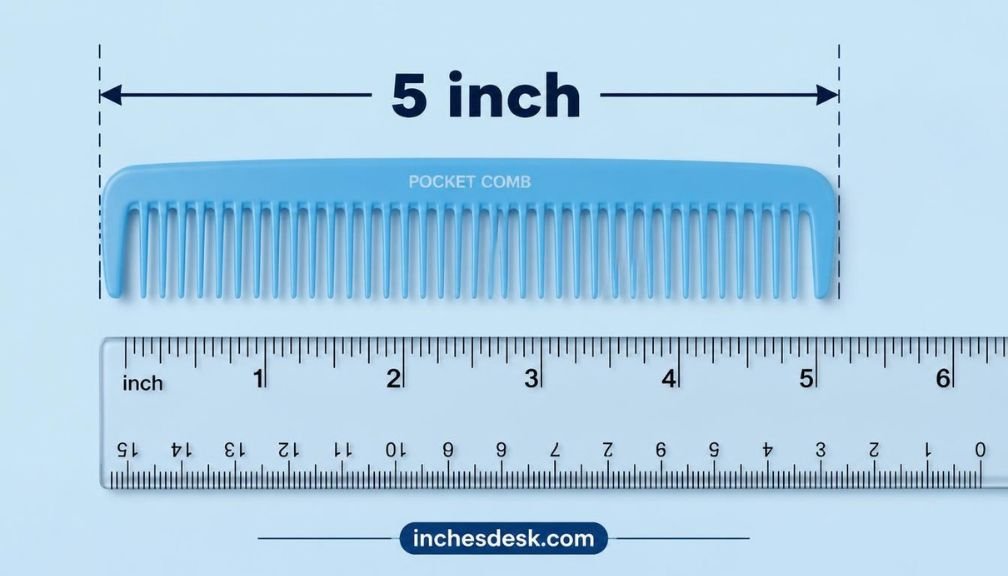
Compact travel combs are typically manufactured at almost exactly 5 inches so they fit flat inside a wallet, purse, or gym bag pocket without adding bulk. The full-size version of the same comb usually runs 7 to 8 inches.
Comb manufacturers settled on this size deliberately: long enough to comb a full head of hair in a few strokes, short enough to disappear into a jacket pocket or small bag compartment. If you’re trying to picture 5 inches and happen to travel often, a travel comb is likely already sitting in your toiletry bag right now.
Standard Nail File

Nail files vary more than most items on this list, but many standard emery boards measure between 5 and 7 inches, with the shorter end of that range landing right on the 5-inch mark. Disposable single-use files sold in multipacks tend to sit closest to true 5-inch length.
Salon-style glass and metal files, by contrast, often run longer and shouldn’t be used as your reference if precision matters. When in doubt, reach for the thin cardboard-and-emery type that comes in bulk packs of 10 or more — those are the ones most consistently manufactured at the 5-inch mark.
Folded Travel Toothbrush

A travel toothbrush with a folding handle measures about 5 inches when closed, expanding to a full 7 inches when unfolded for use. The folded length is intentionally kept compact for toiletry bags and carry-on luggage.
This makes it a genuinely useful two-in-one reference: closed, it shows you roughly 5 inches; opened, it shows you closer to 7. If you keep one in a gym bag or suitcase, you effectively carry two size references in a single object.
iPhone 12 Mini / 13 Mini
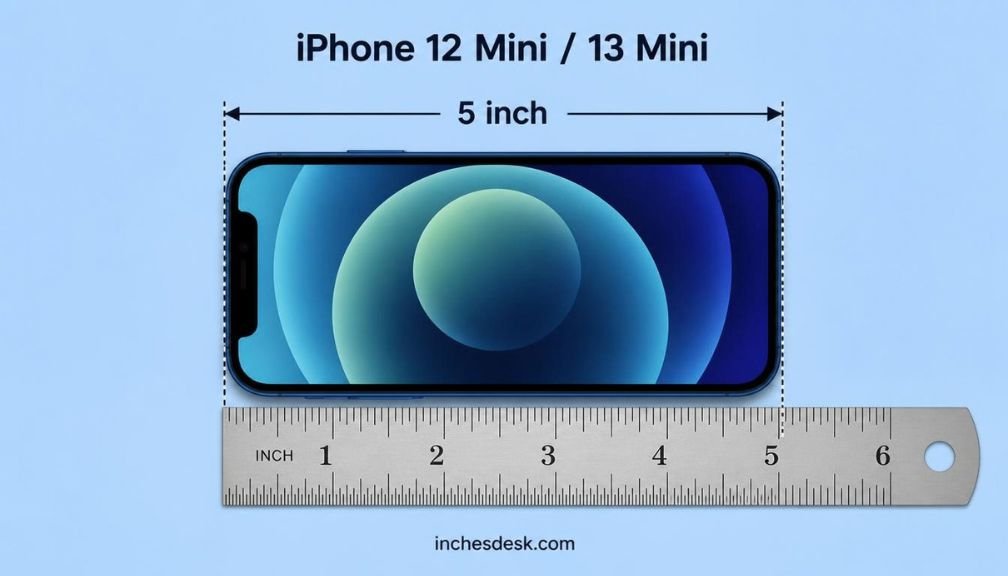
The iPhone 12 Mini and 13 Mini measure 5.18 inches tall, making them the closest real-world tech reference to 5 inches on this entire list. If you or someone nearby owns one, it’s the single most precise object comparison here.
Worth noting: this measurement refers to the physical device height, not the diagonal screen size that’s usually advertised in marketing (5.4 inches for the display). If you’re using a Mini as your mental reference, picture the whole phone body top to bottom, not just the glass.
Compact TV Remote
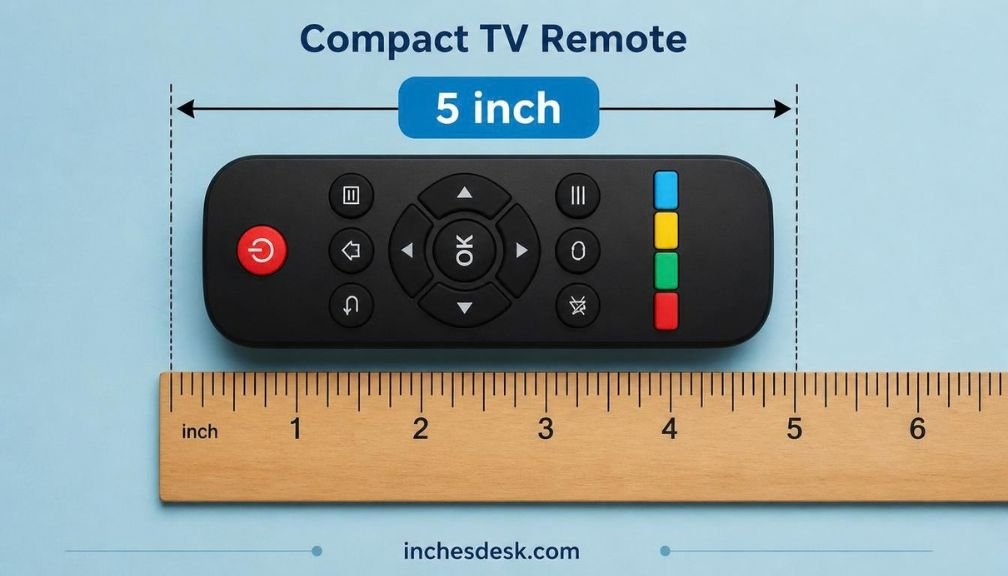
Small, simplified TV remotes — the kind bundled with soundbars or streaming sticks — typically run 5 to 6 inches long. Full-featured universal remotes tend to run longer, closer to 7 or 8 inches, so it’s specifically the stripped-down remotes that match this measurement.
Streaming-stick remotes (the kind that ship with devices like a Roku or Fire TV Stick) are usually the closest match, since they’re built with a minimal number of buttons and a narrower, shorter body than a full cable-box remote.
Small Drinking Glass

A short juice glass or rocks glass generally stands 4.5 to 5 inches tall, noticeably shorter than a standard highball glass, which often runs 6 inches or more. It’s a useful visual if you’re picturing height rather than length.
Glassware sizing isn’t standardized the way office supplies or electronics are, so treat this one as a general range rather than a precise match. Still, if you picture a short, wide juice glass rather than a tall water glass, you’re in the right neighborhood.
Small Pocket Notepad

Pocket-sized notepads, the kind used by servers or for quick to-do lists, are commonly printed at 3 by 5 inches, meaning the long edge is exactly 5 inches. This is one of the more exact matches on the list since notepad manufacturers standardize around this size.
The 3×5 format is so common that it’s also used for index cards, which makes an index card an equally reliable stand-in if you don’t happen to have a pocket notepad handy — the long edge of a standard index card is also 5 inches.
Mini/Travel Flashlight
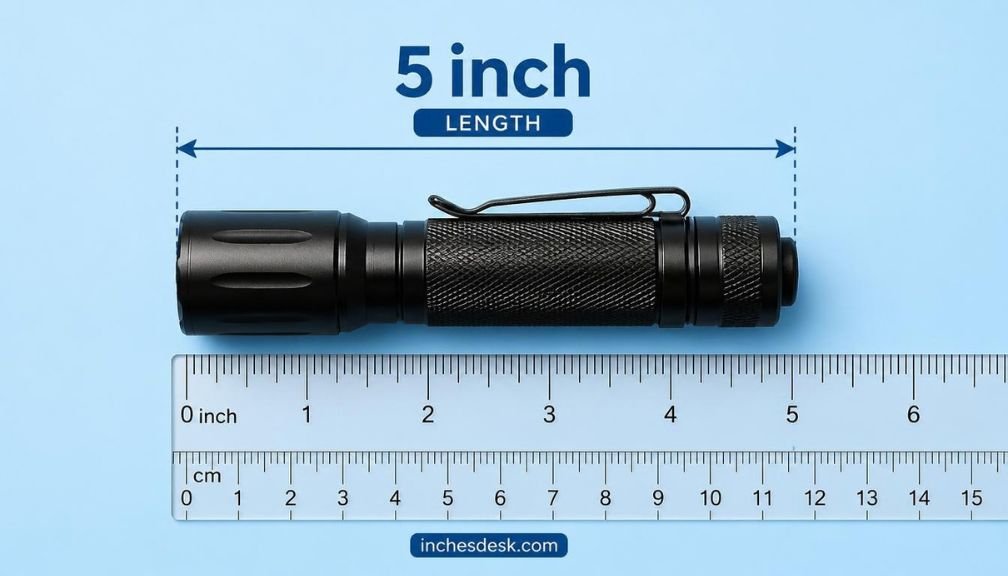
Compact travel flashlights, including many keychain and glovebox models, measure roughly 5 inches from lens to tail cap. Manufacturers keep them at this length deliberately — long enough to grip comfortably, short enough to slip into a bag pocket or glovebox.
Full-size tactical flashlights typically run 6 to 9 inches or more, so if you’re picturing a heavier-duty flashlight, adjust your mental image downward — it’s the smaller, single- or double-AA models that land closest to 5 inches.
Makeup Brush
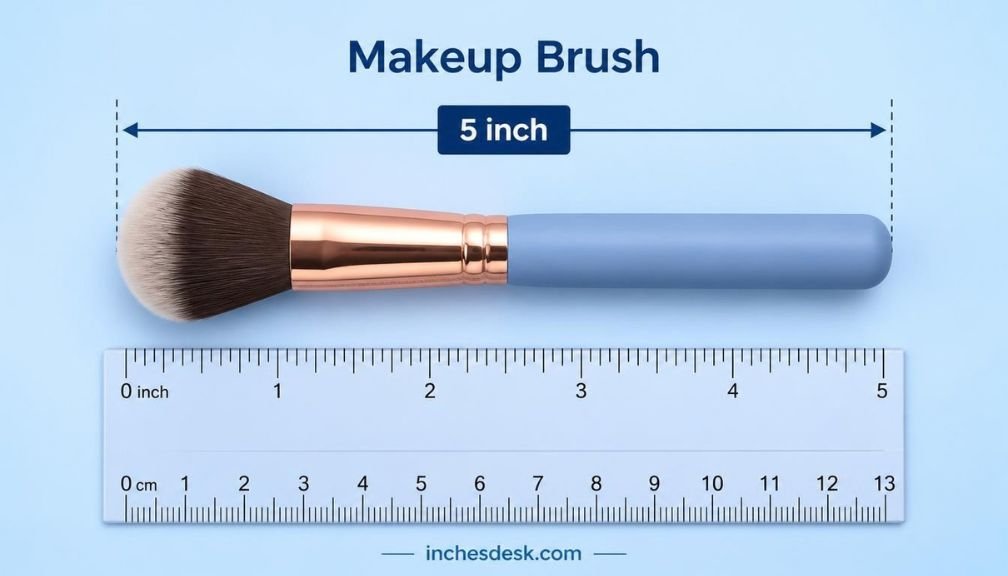
A full-size makeup brush, including handle and bristles, commonly measures around 5 to 6 inches, with foundation and powder brushes landing closest to the 5-inch end. Smaller eyeshadow brushes tend to run shorter, around 4 to 4.5 inches.
Because brush length includes both handle and bristle head, the exact match depends on brush type: a rounded powder or blush brush with a shorter handle tends to sit right around 5 inches, while a long-handled kabuki brush can run noticeably longer.
Standard Hair Clip/Barrette
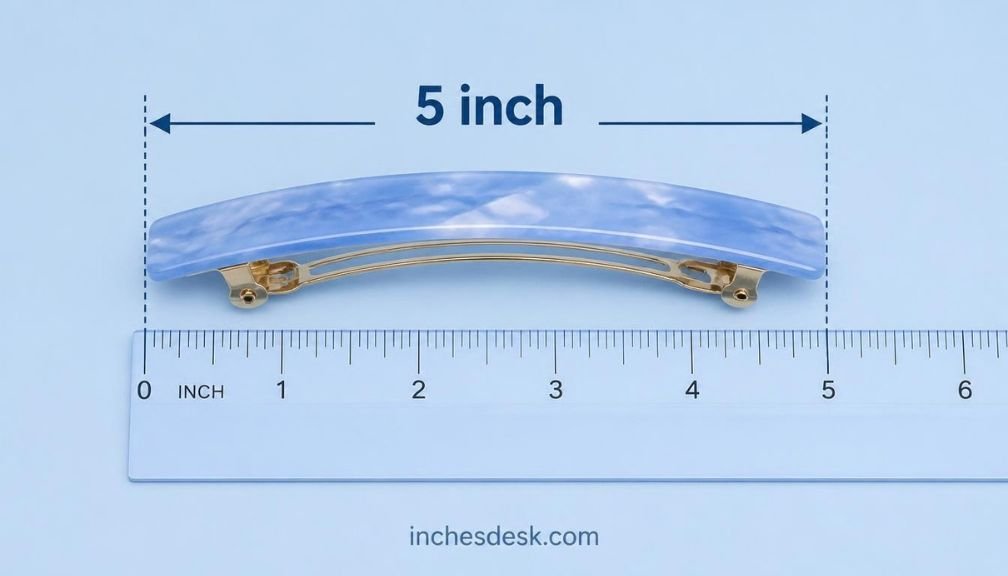
Larger hair clips and barrettes, the style meant to hold a full section of hair, often measure close to 5 inches long. Smaller everyday clips run shorter, closer to 2 to 3 inches, so it’s specifically the larger styling barrettes that match this comparison.
These larger clips are common in the “claw clip” and “banana clip” styles that became popular again in recent years, so if you or someone in your household owns one of those, it’s a quick, tangible way to picture the measurement.
Craft/Kids Scissors

Craft scissors designed for children’s hands typically measure about 5 inches from tip to end of the handles. Adult household scissors usually run longer, closer to 7 or 8 inches, which makes the kids’ version a genuinely useful 5-inch reference for anyone with young children at home.
The shorter overall length isn’t just about safety — it’s also proportioned for smaller hands, with a shorter distance between the finger holes and the blade tip than you’d find on adult scissors. If you have a school-supply box in the house, this is often one of the easiest comparisons to verify firsthand.
Crayola Crayon Box
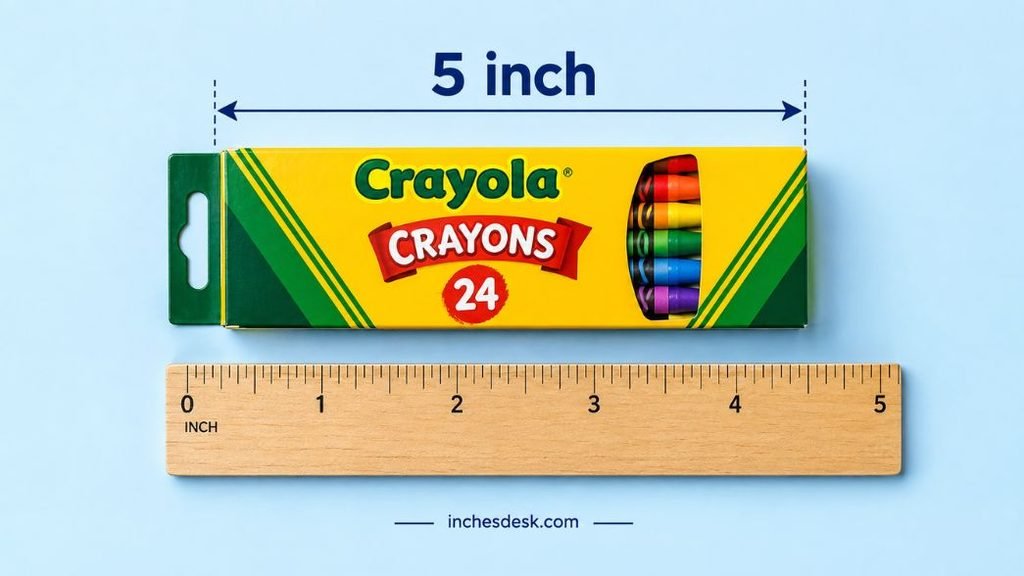
A standard 24-count Crayola crayon box measures close to 5 inches along its longer side. It’s a reference almost everyone has encountered at some point, whether recently or back in a school supply list from childhood.
The individual crayons inside are shorter, typically around 3.5 inches, so it’s specifically the outer box — not the crayons themselves — that lines up with the 5-inch mark. Larger boxes, like the 64- or 96-count sets, are noticeably longer and wider, so stick with the standard 24-count size for an accurate comparison.
How to Measure 5 Inches Without a Ruler
The fastest way to estimate 5 inches without a ruler is to use a dollar bill, a credit card, or your own hand as a reference, since each has a fixed, well-known length. Here’s how each method works:
Dollar bill trick — A U.S. bill measures 6.14 inches long. Cover about 80% of its length with your finger, and the remaining visible portion is close to 5 inches.
Credit card stack — A standard credit card measures 3.37 inches long. One card plus roughly two-thirds of a second card laid end to end gets you to about 5 inches.
Hand-span method — Measure your own spread hand once with an actual ruler, note how close it lands to 5 inches, and reuse that personal reference whenever you need a fast estimate.
Phone-based measuring apps — Most smartphones now include a built-in measuring tool that uses the camera and augmented reality to measure objects accurately, which works well for a quick double-check.
None of these methods will be lab-precise, but each gets you within a fraction of an inch, which is plenty accurate for most everyday tasks.
Common Mistakes When Estimating 5 Inches
The most common mistake people make is rounding based on a single body-part reference without accounting for individual variation, which can throw an estimate off by half an inch or more. A few other frequent errors:
- Assuming every “travel size” or “compact” product is automatically 5 inches — sizes vary by brand and category.
- Confusing diagonal measurements with straight-line length, especially with electronics like phone screens.
- Forgetting that folded or collapsible items (like travel toothbrushes) measure differently open versus closed.
- Estimating from a photo or online image without checking the listed dimensions, since camera angles distort perceived size.
When precision actually matters — cutting material, mailing a package, or buying a case for a device — always confirm with an actual ruler or tape measure rather than relying on visual estimation alone.
Why Knowing This Measurement Actually Matters
Understanding what 5 inches looks like helps with everyday decisions that don’t always come with a ruler attached — judging whether a gift will fit inside an envelope, deciding if a tool will reach into a tight space, or figuring out whether furniture will clear a doorway. Trades and hobbies that involve frequent small measurements, like woodworking, sewing, or crafting, benefit especially from having a mental library of common object sizes, since it speeds up decision-making without stopping to grab a tape measure every time.
It also matters for online shopping, where product photos can be misleading. Knowing that 5 inches is roughly the height of a soda can or the length of a highlighter gives you an instant gut check against a listed dimension before you buy.
Conclusion
Five inches is a small but genuinely useful measurement to have a feel for, and now you’ve got more than a dozen everyday anchors to make it stick — from a highlighter marker to an iPhone Mini to a folded travel toothbrush. The next time you need a quick estimate and there’s no tape measure in sight, one of these objects is probably within reach.
FAQs About 5 Inches
What is 5 inches in cm?
5 inches equals 12.7 centimeters. The conversion is fixed: multiply any inch value by 2.54 to get centimeters, so 5 × 2.54 gives you 12.7 cm exactly.
Is 5 inches big or small?
5 inches is considered small to medium for most everyday objects — larger than a coin or a key, but smaller than a standard pencil or smartphone screen height. Context matters more than the raw number; 5 inches is tiny for a piece of furniture but substantial for a pocket tool.
How can I measure 5 inches without a ruler?
Use a dollar bill (6.14 inches), a credit card (3.37 inches), or a spread hand as a reference point, since each has a known, consistent length you can compare against. A smartphone measuring app is also a fast, reasonably accurate backup option.
Is 5 inches the same as half a foot?
No — half a foot is 6 inches, so 5 inches is actually 1 inch shorter than half a foot. It’s a common mix-up since both numbers feel similar, but 5 inches equals 0.417 feet, not the 0.5 feet that half a foot represents.
What common household item is exactly 5 inches?
A highlighter marker and a small pocket notepad (3×5 inches) are among the most consistently accurate 5-inch references in most households. Both are manufactured to standardized sizes, which makes them more reliable than items with more size variation, like nail files or hair clips.
