
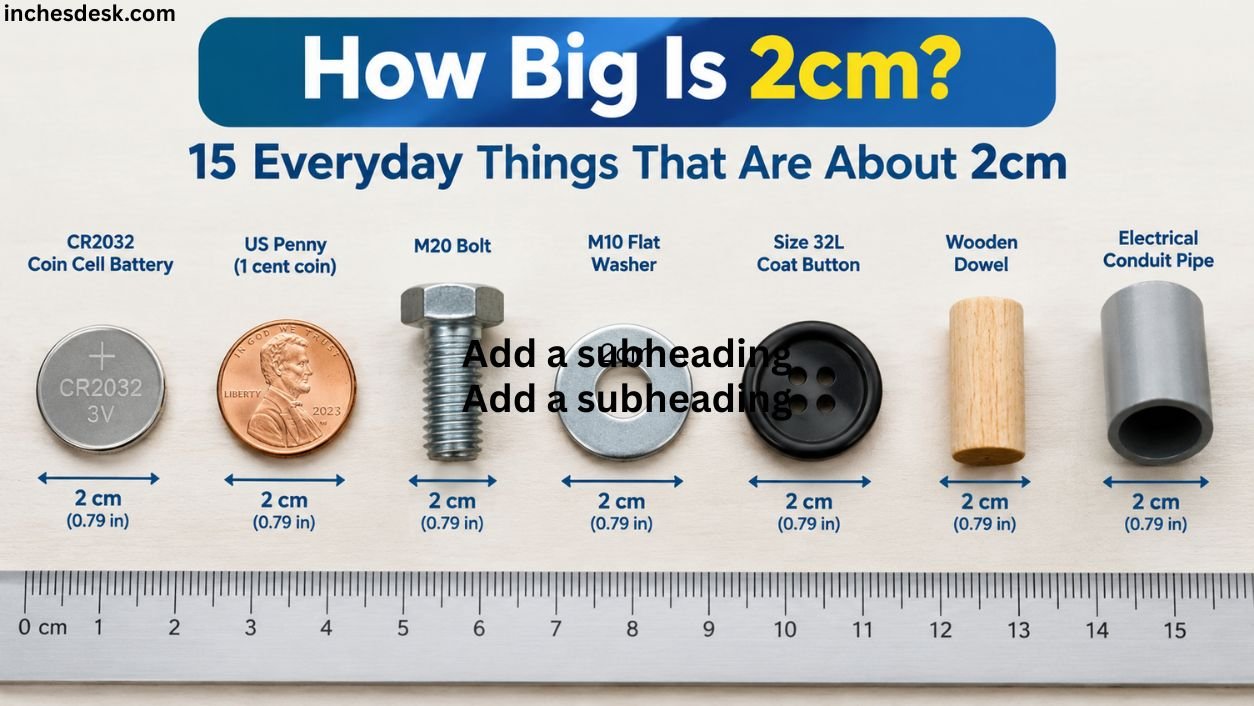
2cm is equal to 20 millimeters, about 0.79 inches, and 0.066 feet. It is a small length, roughly the width of a fingernail for many adults. Because 2 centimeters can be difficult to picture on its own, comparing it with familiar objects makes the measurement much easier to understand.
Whether you are checking a small part, estimating an object’s size, working on a DIY project, or simply trying to visualize a measurement, 2cm is short enough to fit comfortably between the first joints of many fingers. The examples in this guide provide practical reference points, while the conversion table gives you the exact metric and imperial equivalents.
2cm Conversion Table
To convert 2cm into another unit, use the standard conversion relationships: 1 centimeter = 10 millimeters and 1 inch = 2.54 centimeters. Therefore, 2cm equals 20mm and approximately 0.79 inches.
| Measurement | Equivalent to 2cm |
|---|---|
| Centimeters | 2cm |
| Millimeters | 20mm |
| Meters | 0.02m |
| Inches | 0.7874 inches |
| Feet | 0.0656 feet |
| Yards | 0.0219 yards |
| Kilometers | 0.00002km |
| Micrometers | 20,000µm |
Converting 2cm to millimeters
The metric system makes this conversion straightforward:
2cm × 10 = 20mm
So, 2cm is exactly 20mm.
Converting 2cm to inches
To convert centimeters to inches, divide the centimeter measurement by 2.54:
2 ÷ 2.54 = 0.7874 inches
So, 2cm ≈ 0.79 inches, which is just under four-fifths of an inch.
Converting 2cm to meters
Since 100cm = 1 meter, divide 2 by 100:
2 ÷ 100 = 0.02 meters
Therefore, 2cm = 0.02m.
How Big Is 2cm? Size Comparison with 1cm, 3cm and 5cm
2cm is twice as long as 1cm, two-thirds the length of 3cm, and 40% of 5cm. In inches, 2cm is about 0.79 inches, so it is slightly shorter than a standard 1-inch length. Comparing these measurements side by side makes the small difference between them easier to visualize.
| Length | Millimeters | Inches | How it compares with 2cm |
|---|---|---|---|
| 1cm | 10mm | 0.39 in | Half of 2cm |
| 2cm | 20mm | 0.79 in | Reference length |
| 3cm | 30mm | 1.18 in | 1cm longer |
| 5cm | 50mm | 1.97 in | 3cm longer |
2cm compared with 1cm
A 1cm length is exactly half of 2cm. If you imagine a 2cm line divided into two equal parts, each part measures 1cm. This makes 1cm a useful starting point when estimating a very small measurement without a measuring tool.
2cm compared with 3cm
A 3cm length is 1cm longer than 2cm. The difference may look small, but on a short object it represents a substantial increase: 3cm is 50% longer than 2cm.
2cm compared with 5cm
A 5cm length is 2.5 times as long as 2cm. Since 5cm is approximately 1.97 inches, it is also close to 2 inches. A 2cm section would occupy only two-fifths of a 5cm length.
15 Things That Are About 2cm
CR2032 Coin Cell Battery

A CR2032 coin cell battery is exactly 2cm in diameter, making it one of the most useful real-world references for visualizing this measurement. The “20” in CR2032 indicates its 20mm diameter, while “32” refers to its approximate 3.2mm thickness. When viewed from above, the circular face measures 2cm across.
The CR2032 is commonly used in small electronic devices such as watches, calculators, computer motherboard memory systems, key fobs, and other compact electronics. If you have one nearby, its diameter provides a convenient physical reference for 2cm.
US Penny (1 cent coin)
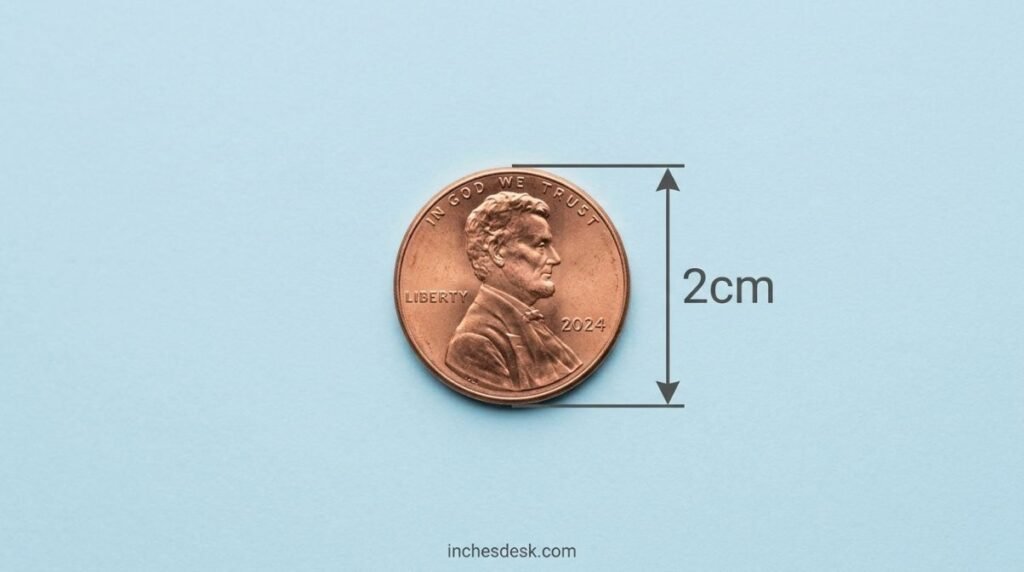
A US penny is about 1.9cm in diameter, making it very close to 2cm. A modern US one-cent coin has a diameter of 19.05mm, so it is only 0.95mm shorter than 2cm across.
That small difference is difficult to judge by eye, which makes a penny a practical everyday comparison. Place a penny beside a 2cm measurement and the two diameters will look nearly identical. Keep in mind that this comparison refers to the penny’s diameter, not its thickness.
M20 Bolt
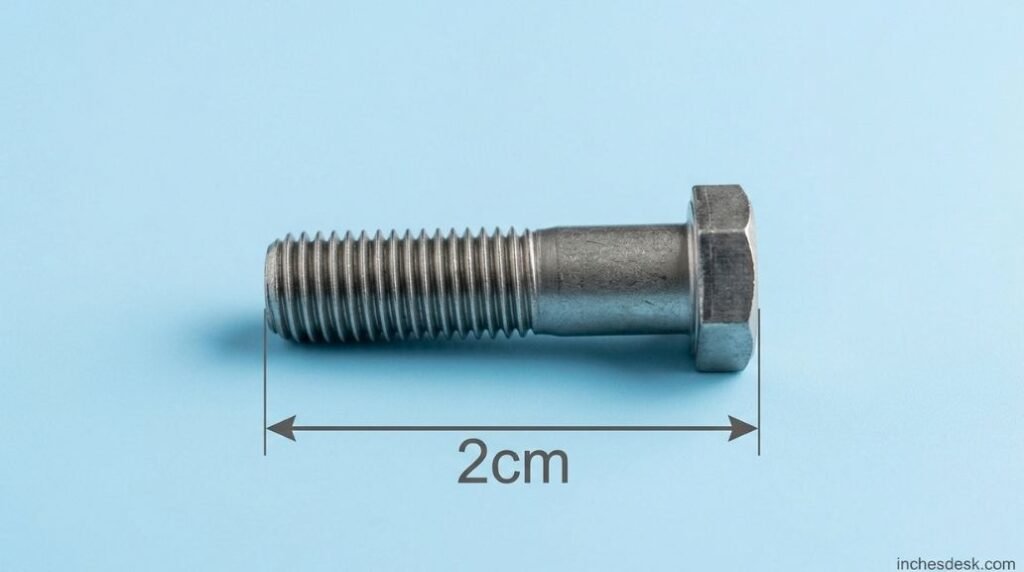
An M20 bolt has a nominal thread diameter of 20mm, or exactly 2cm. The “M20” designation refers to the approximate nominal diameter of the bolt’s threaded portion.
The overall size of an M20 bolt is larger than 2cm because the bolt also has a head and a specific length. For visualization, focus on the diameter of the threaded shaft. Actual dimensions can vary slightly depending on the bolt standard, thread type, and manufacturing tolerances.
M10 Flat Washer
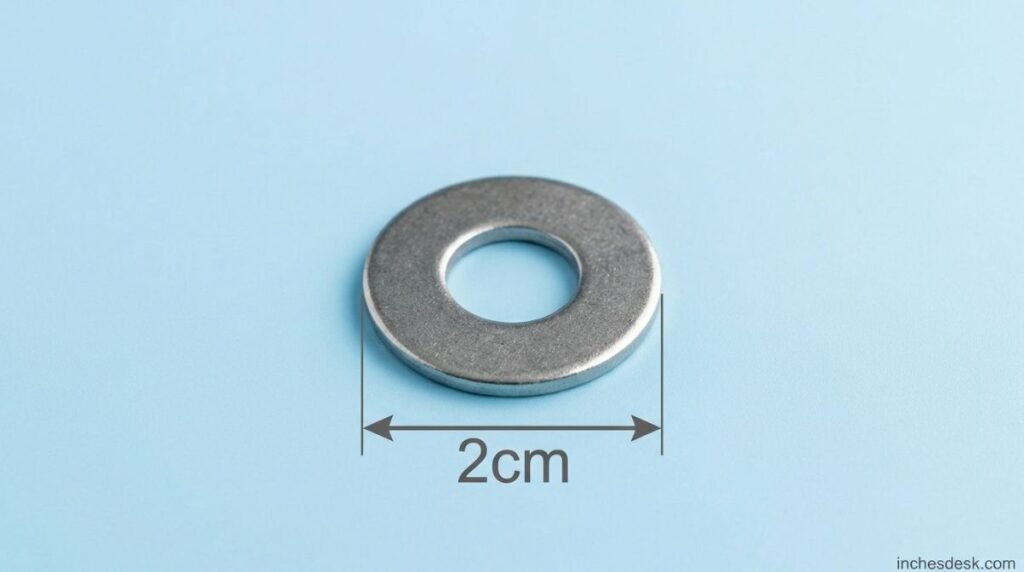
An M10 flat washer is designed for a 10mm nominal bolt, so its central hole is around 1cm rather than 2cm. However, some M10 flat washers have an outside diameter close to 2cm, making the washer’s overall width a useful approximate reference.
Washer dimensions vary according to the applicable standard and product design, so an M10 washer should be treated as an approximately 2cm example, not an exact universal measurement. When precision matters, check the manufacturer’s stated outside diameter.
Size 32L Coat Button
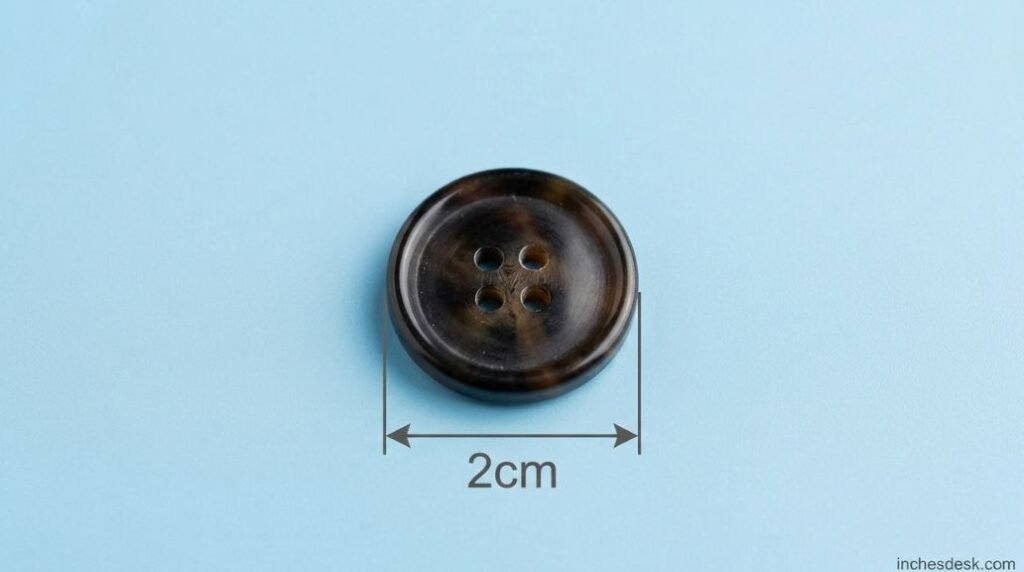
A 32L coat button is approximately 20mm, or 2cm, in diameter when the button size follows the traditional ligne-based sizing system. Button sizing can be expressed in “L” or lignes, with 32L corresponding to roughly 20mm.
A button of this size is noticeably larger than a small shirt button but still compact enough for coats, jackets, and other heavier garments. Because button manufacturers can produce slightly different designs, the actual diameter may vary around the nominal size.
Wooden Dowel

A 20mm wooden dowel has a diameter of exactly 2cm. Wooden dowels are commonly sold in standardized metric diameters, making a 20mm dowel a straightforward physical example of this measurement.
Unlike objects such as fruit or buttons, a manufactured dowel provides a relatively consistent reference. If you have a 20mm dowel, measuring straight across its circular end gives you 2cm. Its length can be much greater, but its thickness or diameter is the relevant dimension here.
Electrical Conduit Pipe

Some electrical conduit products have an outside diameter close to 2cm, although the exact size depends on the conduit type and regional sizing standard. For example, a small conduit may have an outside diameter around the 20mm range even when its nominal trade size is specified differently.
This distinction matters because conduit is often identified by a nominal size rather than its actual outside diameter. If you need a precise 2cm reference for an installation, use the manufacturer’s dimensional specification instead of relying only on the nominal conduit size.
Rebar (steel bar)
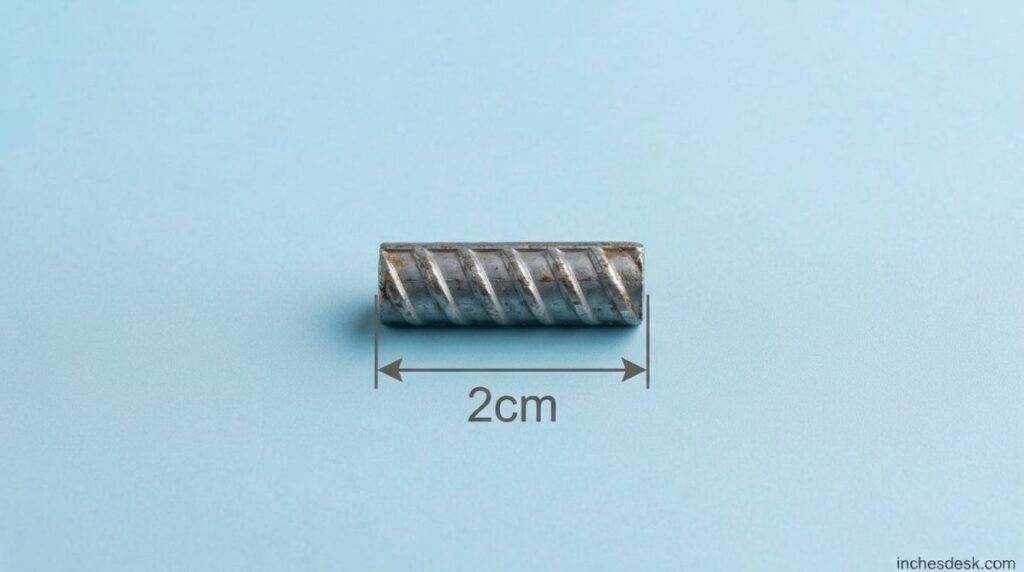
A 20mm rebar has a nominal diameter of 2cm, providing a strong and practical construction-related example. Reinforcing steel is commonly identified by its nominal diameter, so a 20mm bar corresponds directly to 2cm.
The actual surface of deformed rebar includes ribs or patterns, meaning it does not look like a perfectly smooth cylinder. Nevertheless, the nominal diameter is the useful measurement when discussing the bar’s size. This makes 20mm rebar a helpful reference for construction and DIY applications.
Scotch Magic Tape

The core of a standard small roll of tape can provide a roughly 2cm-scale reference, but Scotch Magic Tape itself comes in multiple roll and dispenser formats. Because the tape width and core dimensions vary between products, it should not be treated as an exact 2cm object.
If you are using a roll of tape to estimate 2cm, check the specific product’s dimensions first. For a precise measurement, a marked measuring tool is more reliable than assuming every Scotch tape roll has the same dimensions.
Sweet Cherry
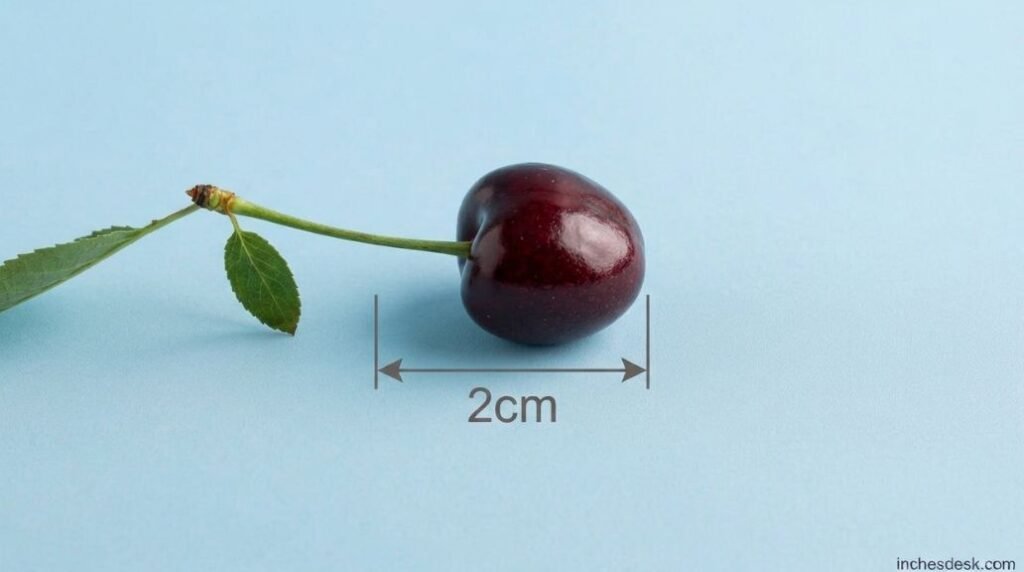
A sweet cherry can be around 2cm in diameter, although its size naturally varies depending on the variety and growing conditions. A cherry close to 20mm across gives you a useful visual representation of this small measurement.
Because fruit is organic and irregularly shaped, measure across the widest part when comparing it with 2cm. Some cherries will be smaller than 2cm, while larger varieties can exceed it, so this is best considered an approximate everyday comparison.
Large Green Olive

A large green olive can be around 2cm across its width, making it another convenient food-based comparison. The exact dimensions depend on the olive variety, processing style, and individual fruit.
Unlike a manufactured 20mm component, an olive will rarely be perfectly round. For a visual estimate, imagine a line about 2cm long running across its widest section. This gives a practical sense of how short 2cm really is.
Polyester Ribbon
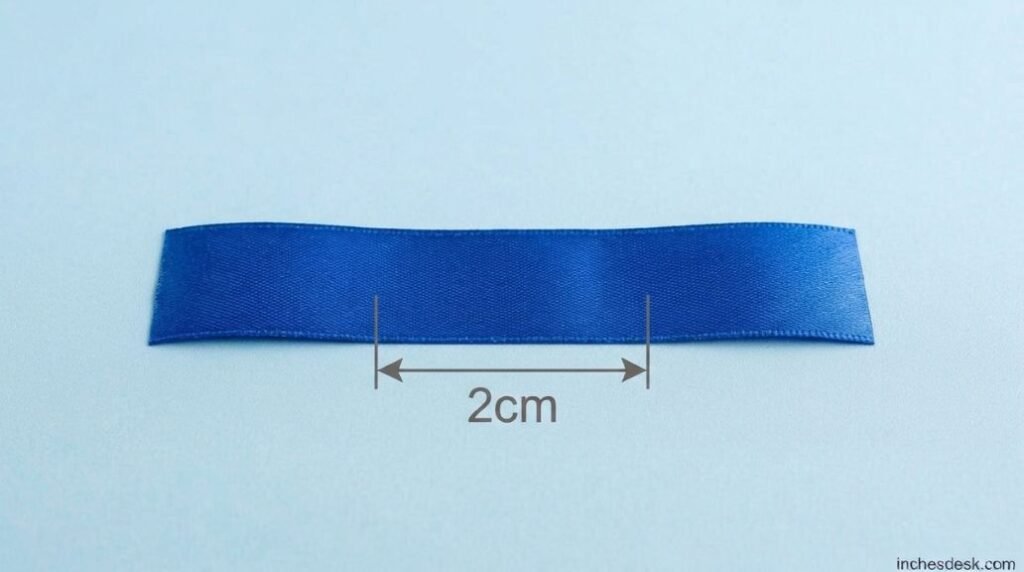
A 20mm-wide polyester ribbon is exactly 2cm wide. Ribbon is particularly useful for understanding the measurement because manufacturers commonly specify ribbon width in millimeters.
For example, a ribbon labeled 20mm wide measures 2cm from one edge to the other. Its length can be several meters, but the width provides the 2cm reference. This makes 20mm ribbon useful for sewing, crafts, gift wrapping, and decorative projects where consistent dimensions matter.
Forstner Drill Bit

A 20mm Forstner drill bit has a cutting diameter of 2cm. Forstner bits are designed to create flat-bottomed or overlapping holes in wood, and their cutting diameter is normally given in millimeters or inches.
When a Forstner bit is marked 20mm, the cutting circle is intended to produce a hole approximately 2cm in diameter under appropriate drilling conditions. The finished hole can vary slightly because of material, technique, and bit condition, so the bit’s labeled diameter is the useful reference.
Googly Eyes
A 20mm googly eye is exactly 2cm in diameter, making it an easy craft-based reference. Googly eyes are sold in many different sizes, so the package specification matters when choosing one as a 2cm comparison.
A 20mm eye is large enough to be easily visible on craft projects while remaining small enough for cards, decorations, toys, and classroom activities. If the package says 20mm, you can convert that directly to 2cm because 10mm equals 1cm.
How to Measure 2cm Without a Ruler
You can estimate 2cm without a ruler by using familiar objects, your finger, or a printable reference. A CR2032 battery has a 20mm (2cm) diameter, while a US penny is about 19.05mm, making both useful visual references when a measuring tool is unavailable.
For a quick estimate, try these practical methods:
- Use a CR2032 battery: Its diameter is exactly 2cm (20mm), so the circular face gives you a convenient reference.
- Use a US penny: A penny measures 19.05mm across, which is only 0.95mm shorter than 2cm.
- Use a 20mm object: A 20mm dowel, ribbon width, drill bit, or similar manufactured item provides a direct comparison.
- Use your fingertip carefully: The width of a fingertip varies considerably from person to person, so this is only a rough estimate rather than a precise measurement.
- Compare with 1cm: If you can identify a 1cm distance, place two equal 1cm sections end to end to visualize 2cm.
For DIY work, cutting, drilling, sewing, or fitting parts, these methods are useful for estimation but should not replace an actual measuring tool when accuracy matters. Even a difference of a few millimeters can affect whether a small component fits correctly.
Printable Actual-Size 2cm Ruler
A true-to-size 2cm reference should measure exactly 20mm when printed at 100% scale. If you create or print a 2cm ruler, select Actual Size, 100% scale, or Do Not Scale in the print settings; otherwise, automatic scaling can change its dimensions.
To check a printed reference, measure the complete 2cm section from one endpoint to the other. It should measure 20mm. If it measures 18mm, 22mm, or another value, the document or printer has been scaled and should not be used as an actual-size reference.
For the most reliable result:
- Open the printable measurement page.
- Select 100% / Actual Size in the printer settings.
- Disable options such as Fit to Page or Scale to Fit.
- Print the page on standard paper.
- Measure the printed 2cm reference with a ruler or another verified measuring tool.
- Use the printed reference only after confirming that it has retained its intended size.
A printable 2cm guide is particularly useful when comparing small craft pieces, hardware, buttons, drill sizes, and other objects where a visual reference is more convenient than repeatedly converting between centimeters and inches.
Where 2cm Matters in Real Life
2cm matters whenever a small difference can affect fit, spacing, cutting, drilling, or the appearance of an object. In practical work, 2cm is large enough to be noticeable on small components but small enough that estimating it by eye can be difficult.
In DIY and woodworking: 2cm can represent the diameter of a small dowel or drill bit. A 20mm dowel, for example, has a diameter of exactly 2cm, while a 20mm Forstner bit is intended to cut a hole approximately 2cm across. Knowing the difference between 18mm, 20mm, and 22mm can matter when selecting hardware or creating matching holes.
In construction: measurements around 2cm appear in reinforcing steel and other building materials. A 20mm rebar has a nominal diameter of 2cm. Small dimensional differences can affect spacing, fitting, and material selection, so construction measurements should be taken with the appropriate measuring equipment rather than estimated visually.
In crafts and sewing: a 2cm width is easy to encounter. A 20mm polyester ribbon, for instance, is exactly 2cm wide. Buttons, decorative pieces, googly eyes, and other craft supplies may also be sold in dimensions around this size. Knowing that 20mm equals 2cm makes product specifications easier to understand.
In electronics: the CR2032 coin cell provides one of the clearest examples. Its circular face has a 20mm diameter, giving you a ready-made reference for 2cm. Small batteries, components, connectors, and enclosures often use millimeter measurements, so converting between millimeters and centimeters can be useful when checking whether a component will fit.
In shopping: product dimensions can determine whether a small item is suitable for a particular space. A difference of 2cm may be significant when choosing accessories, replacement parts, storage components, or hardware. Always check whether the stated measurement refers to length, width, height, diameter, or thickness before comparing products.
For students: understanding 2cm also provides a simple introduction to metric measurement. Since 1cm = 10mm, a 2cm measurement can immediately be written as 20mm. This relationship is useful for school projects, technical drawings, science activities, and basic geometry.
The key point is simple: 2cm = 20mm = approximately 0.79 inches. Once you become familiar with that length, everyday objects such as a CR2032 battery, 20mm ribbon, or 20mm hardware can serve as convenient visual references.
FAQs
Is 2cm the same as 20mm?
Yes. 2cm is exactly 20mm because 1 centimeter contains 10 millimeters. The calculation is simple: 2 × 10 = 20mm.
How many inches is 2cm?
2cm equals approximately 0.79 inches. The exact conversion is 2 ÷ 2.54 = 0.7874 inches. This means 2cm is slightly shorter than 0.8 inches.
Is 2cm bigger than 1 inch?
No. 1 inch is 2.54cm, while 2cm is approximately 0.79 inches. Therefore, 2cm is 0.54cm shorter than 1 inch.
What everyday object is exactly 2cm?
Several manufactured objects can provide an exact 2cm reference when their specified dimension is 20mm. Examples include a CR2032 battery diameter, 20mm wooden dowel, 20mm ribbon width, and 20mm googly eye.
Is a US penny close to 2cm?
Yes. A modern US penny has a diameter of 19.05mm, or 1.905cm. It is therefore only 0.95mm shorter than 2cm, making it a useful approximate visual comparison.
How can I measure 2cm without a ruler?
You can estimate 2cm by comparing the length with a known 20mm object, such as the diameter of a CR2032 battery. A US penny is also close, measuring 19.05mm across. These methods are suitable for rough estimates but not precision work.
How big is 2cm compared with 5cm?
2cm is 40% of 5cm. In other words, if a 5cm length is divided into five equal 1cm sections, 2cm occupies two of those sections.
How many centimeters are in 2cm?
There are simply 2 centimeters in 2cm. In other units, the same length is 20mm, 0.02m, and approximately 0.7874 inches.
Conclusion
2cm is a small but useful measurement equal to 20mm or approximately 0.79 inches. While it can be difficult to visualize on its own, familiar objects make the size much easier to understand. A CR2032 battery has a 20mm diameter, a US penny is very close at 19.05mm, and manufactured items such as 20mm dowels, ribbon, drill bits, and googly eyes can provide practical references.
For everyday estimates, these objects can help you recognize what 2cm looks like. For DIY projects, construction, crafts, drilling, or any task where an exact fit matters, use a ruler, caliper, or other accurate measuring tool rather than relying only on visual comparison.
