
What Is 4 Inches? (Quick Overview)
4 inches is equal to 10.16 centimeters, 101.6 millimeters, or one-third of a foot. It is a relatively short measurement that is easy to visualize using familiar household, shopping, construction, and personal items. Knowing what 4 inches looks like can help when you do not have a ruler nearby.
The exact conversion is:
| Measurement | Equivalent |
| 4 inches | 10.16 centimeters |
| 4 inches | 101.6 millimeters |
| 4 inches | 0.333 feet |
| 4 inches | 0.111 yards |
To convert inches to centimeters, multiply the number of inches by 2.54:
4 × 2.54 = 10.16 centimeters
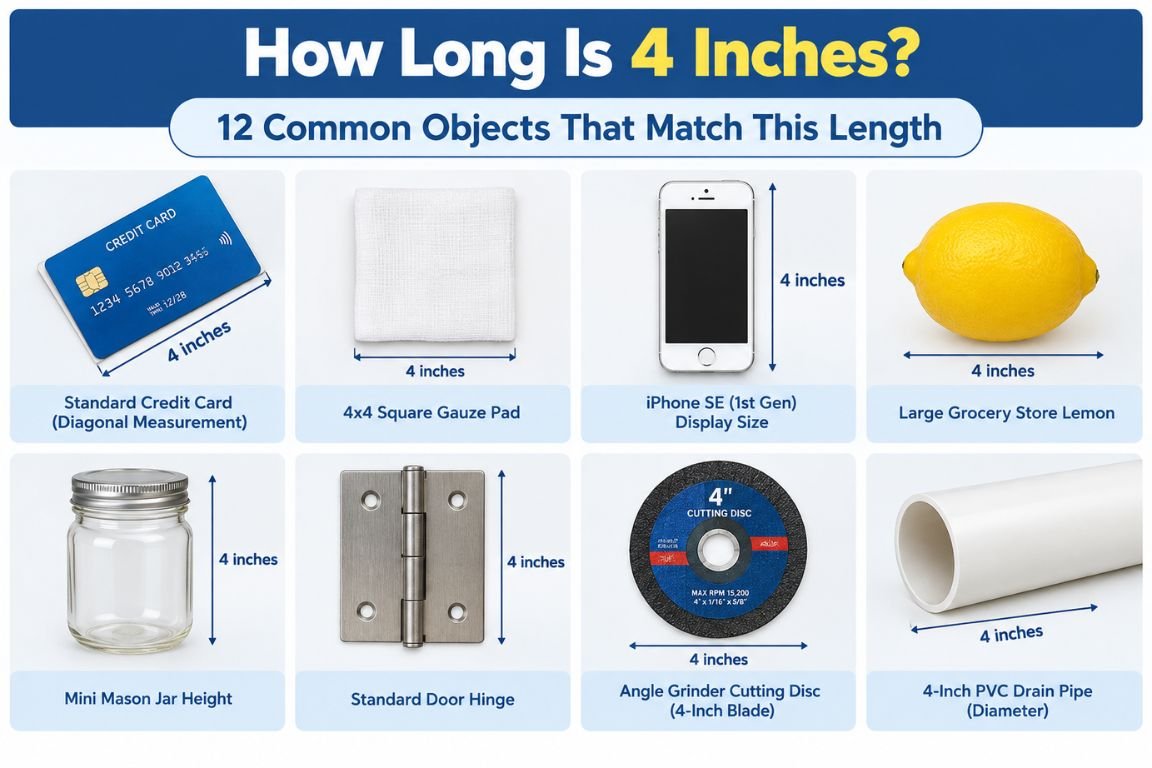
In practical terms, 4 inches is a little longer than 10 centimeters. It is roughly the length of a large lemon, the diagonal of a standard credit card, or the diameter of some small household and plumbing components. However, these objects can vary in their actual dimensions, so they work best as visual references rather than exact measuring tools.
For students, DIYers, shoppers, and tradespeople, having a few familiar 4-inch size references in mind can make measurements easier to estimate. The next section looks at 12 everyday objects and components that are commonly around this size.
12 Everyday Objects That Are Around 4 Inches Long
Standard Credit Card (Diagonal Measurement)

A standard credit card is about 3.375 inches wide and 2.125 inches tall, but its diagonal measures roughly 3.99 inches, which is essentially 4 inches. This makes the diagonal of a typical payment card one of the most convenient real-world references for visualizing this length.
If you place a credit card diagonally from one corner to the opposite corner, the distance is very close to 4 inches. This comparison is especially useful because most bank cards, debit cards, and similar ID-sized cards follow the same standard dimensions.
4×4 Square Gauze Pad
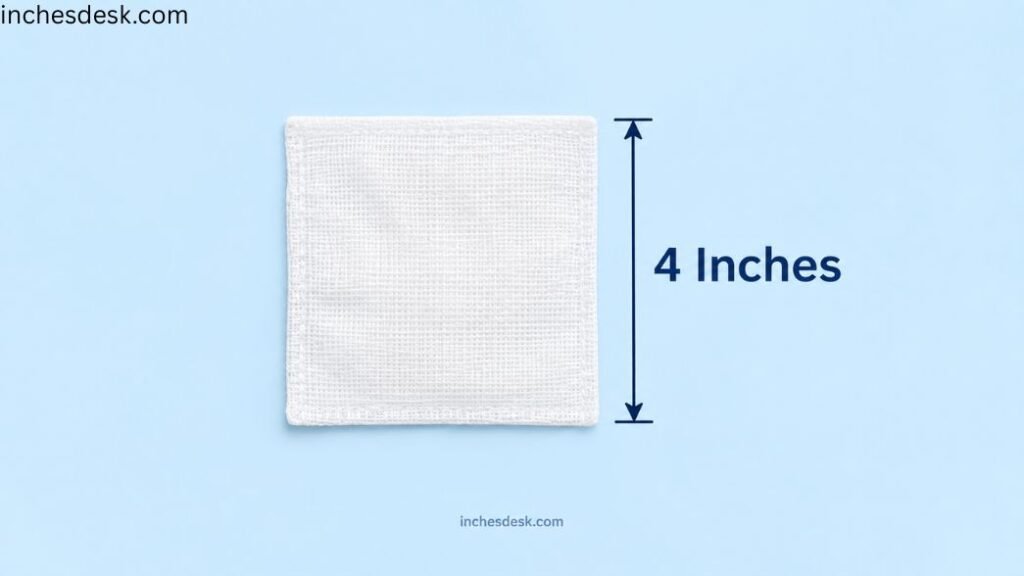
A 4 × 4-inch gauze pad provides an especially straightforward reference because its labeled dimensions are directly related to the measurement. When laid flat, one side measures 4 inches, or 10.16 centimeters.
These gauze pads are commonly used as a basic size reference because their square shape makes the measurement easy to visualize. Keep in mind that medical gauze can be folded, compressed, or packaged differently, so the stated size generally refers to the pad’s intended dimensions rather than its thickness.
iPhone SE (1st Gen) Display Size
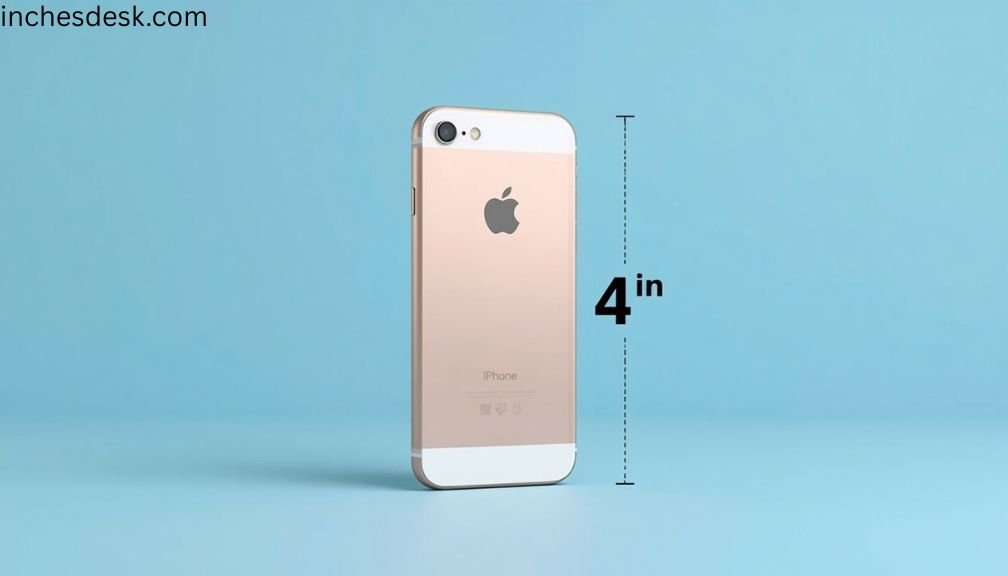
The first-generation iPhone SE has a 4-inch display, measured diagonally from one corner of the screen to the opposite corner. This is a useful example because it shows that a 4-inch measurement does not always mean an object is 4 inches long from end to end.
A screen’s advertised size is normally its diagonal measurement. Therefore, the 4-inch display provides a familiar visual reference for understanding a diagonal distance of approximately 10.16 centimeters.
Large Grocery Store Lemon
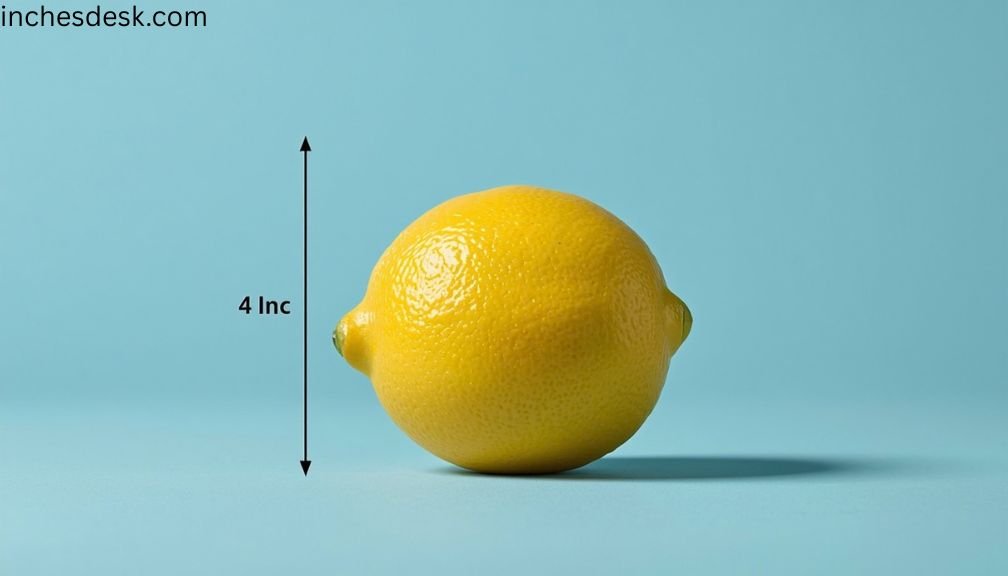
A large lemon can be roughly 4 inches long, although its size depends on the variety, growing conditions, and how mature it is. Many lemons are shorter than this, while particularly large ones can reach or exceed 4 inches.
For a quick visual estimate, imagine a larger lemon positioned lengthwise. Its longest dimension can give you a reasonable sense of what 4 inches looks like. Because fruit naturally varies in size, however, a lemon should be treated as an approximate comparison rather than a precision measuring object.
Mini Mason Jar Height

Some small mason jars and miniature storage jars are close to 4 inches tall, particularly compact jars designed for individual servings, crafts, spices, or small storage purposes.
A jar that stands approximately 4 inches from its base to its top provides a useful vertical reference. When comparing one with a 4-inch measurement, measure the actual body height rather than including a lid unless the stated product dimension specifically includes the lid.
Standard Door Hinge
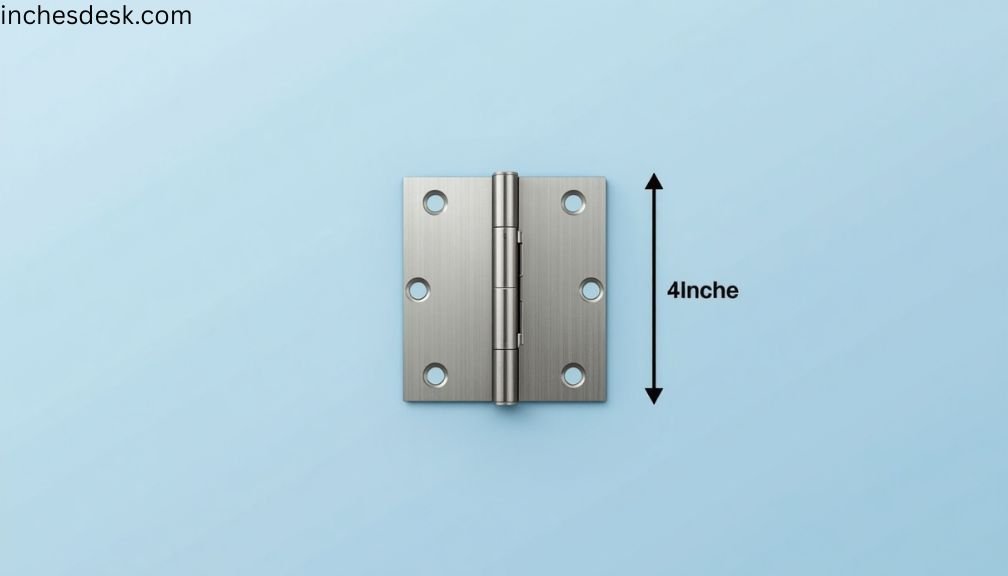
A common residential door hinge can have a leaf or overall dimension close to 4 inches, with 4-inch hinges being a widely encountered hardware size. The exact measurement depends on which part of the hinge is being measured and the hinge’s design.
For DIY projects, this distinction matters. A hinge described as a 4-inch hinge generally refers to its nominal hinge size, not necessarily every individual dimension of the hardware. Always check the manufacturer’s specifications when selecting replacement hardware.
Angle Grinder Cutting Disc (4-Inch Blade)
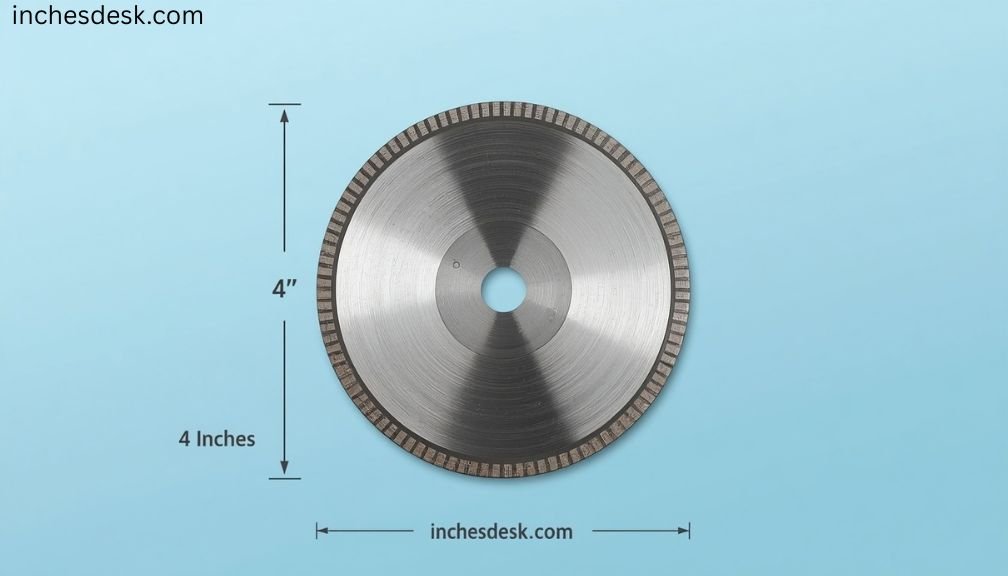
A small angle grinder cutting disc may have a diameter of approximately 4 inches. In this case, the 4-inch measurement runs straight across the circular disc through its center.
A 4-inch diameter means the distance from one edge of the disc to the opposite edge is 4 inches, while the radius is 2 inches. This is a good example of why it helps to identify what type of measurement is being discussed: diameter, radius, length, width, and diagonal all describe dimensions differently.
4-Inch PVC Drain Pipe (Diameter)

A PVC pipe described as 4 inches commonly refers to its nominal pipe size, which is not necessarily the same as the exact outside or inside diameter. For example, a nominal 4-inch PVC drainage pipe can have an actual outside diameter greater than 4 inches.
This makes it an important reference for DIYers and tradespeople: “4-inch pipe” does not automatically mean the pipe measures exactly 4.00 inches across. If you need to make a precise connection or replacement, use the manufacturer’s specified dimensions and pipe standard rather than relying only on the nominal size.
HVAC Vent Pipe Diameter
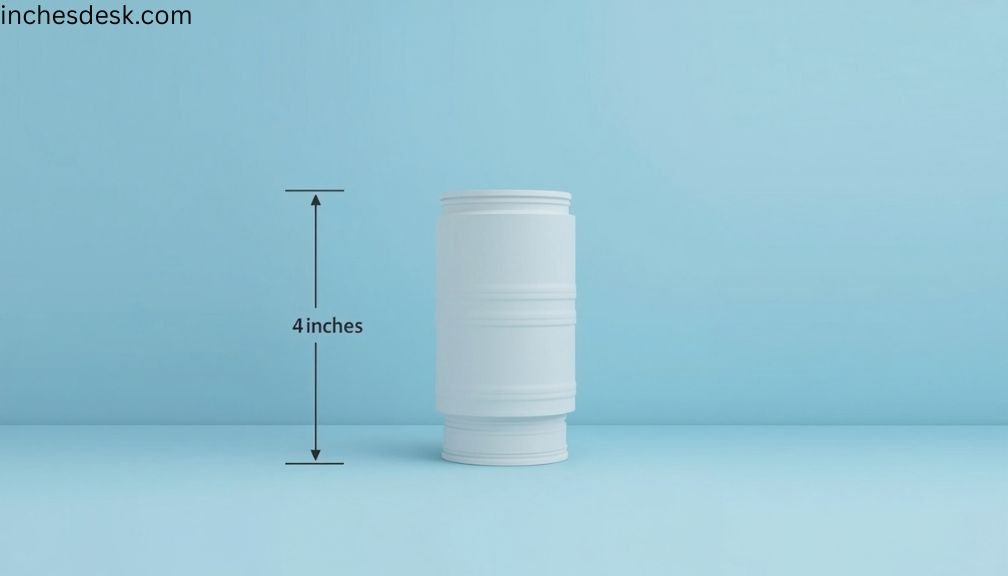
Some HVAC ducting and vent components are available in approximately 4-inch nominal diameters. A circular 4-inch diameter would span 4 inches directly across its center from one outer edge to the other.
Flexible ducting, rigid metal duct, and vent connectors can have different specifications, so the advertised size should be checked before purchasing replacement parts. For a basic visual reference, though, a small 4-inch ventilation opening gives a useful sense of how wide 4 inches is.
Security Screw / Timber Fastener
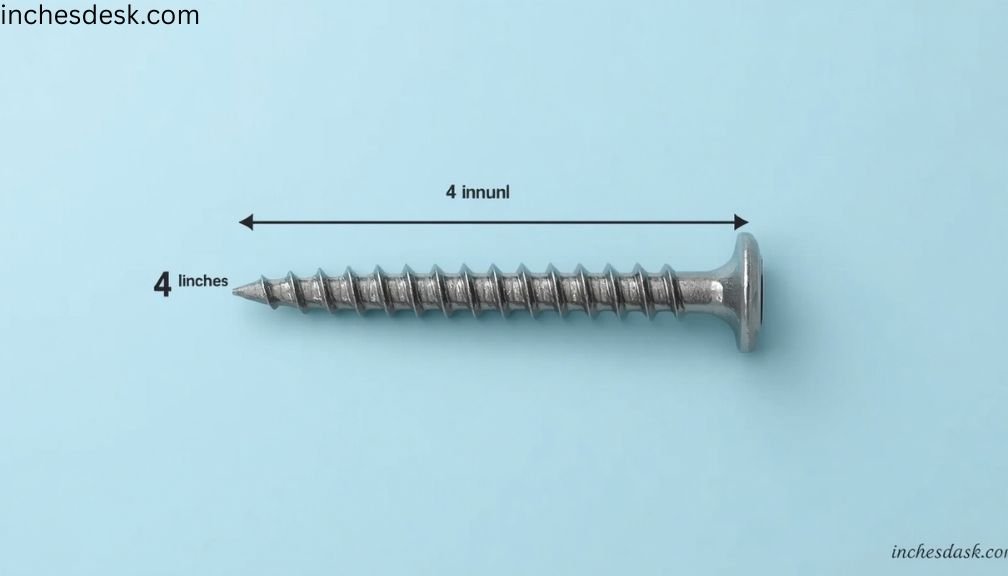
Some longer security screws and timber fasteners are manufactured around 4 inches in length. In this case, the measurement normally runs from the appropriate starting point of the screw head to the tip.
A 4-inch fastener can look surprisingly long when compared with smaller household screws. For woodworking, decking, framing, and repair work, matching the correct screw length is more important than simply estimating it visually, because the required length depends on the materials and connection being made.
4×4 Square Kitchen Floor Tile

A small 4 × 4-inch square tile has a side length of exactly 4 inches and measures 16 square inches in surface area. This gives you a particularly easy way to picture the measurement because the four-inch dimension appears along each side.
Small square tiles are often used for decorative backsplashes, borders, and other applications. Actual tile sizes can vary slightly because manufacturers may use nominal dimensions, so product specifications should be checked when an exact fit is required.
Mini Desk Clock Frame

Some compact desk clocks have an overall frame dimension close to 4 inches, particularly small decorative or travel-style models. Depending on the design, the 4-inch measurement may describe the clock’s height, width, or overall diameter.
As a visual comparison, imagine a small desk clock standing upright on a table. A clock that is about 4 inches tall gives you a practical sense of a little over 10 centimeters. Since clock designs vary considerably, use this example as a general size reference rather than an exact standard.
How Long Is 4 Inches of Hair? (Visual & Style Guide)

4 inches of hair is about 10.16 centimeters long. On the head, this length is enough for noticeable texture, short curls, a small ponytail in some hairstyles, or a defined layered style. How 4 inches looks depends on hair type, curl pattern, thickness, and whether the measurement is taken straight or along the natural curve.
Hair length is usually measured from the scalp or root to the end of the hair strand. A straight strand measuring 4 inches will appear close to 10 centimeters when stretched or laid flat. Curly or tightly coiled hair can appear considerably shorter because the hair bends and contracts naturally.
For a simple visual guide, 4 inches of straight hair is around the length of a small smartphone’s shorter dimension or a large lemon. On the head, however, the appearance can be very different because hair grows in different directions and may be styled with volume.
| Hair Type | How 4 Inches May Look |
| Straight hair | Clearly visible short-to-medium length with noticeable movement |
| Wavy hair | Can appear somewhat shorter because of the wave pattern |
| Curly hair | Looks shorter than its stretched length because curls contract |
| Coily hair | May appear significantly shorter while naturally curled |
| Fine hair | Often looks lighter and less bulky at this length |
| Thick hair | Can appear fuller and more substantial |
If you are measuring hair before a haircut, asking for 4 inches removed is different from asking for hair to be 4 inches long. In the first case, the stylist removes four inches from the existing length. In the second, the goal is for the remaining hair to measure approximately four inches.
For the most consistent measurement, straighten or gently stretch a strand, place the starting point at the root, and measure to the end. Avoid pulling the hair aggressively, especially if it is fragile or naturally curly.
How to Measure 4 Inches Without a Ruler (Hand & Household Hacks)
You can estimate 4 inches without a ruler by using familiar objects, your hand, or a known measurement such as a credit card. Since 4 inches equals 10.16 centimeters, the goal is to find a reference that is close to this length and use it consistently.
Use a Credit Card Diagonal
A standard credit or debit card measures about 3.375 × 2.125 inches, and its diagonal is approximately 4 inches. Place the card diagonally across the area you want to estimate. This is one of the most convenient household references because payment cards are widely available and have standardized dimensions.
Use Your Hand
Your hand can provide a quick personal reference, but it is not a universal measuring tool. For many people, the distance across part of the palm or the width of several fingers placed together may come reasonably close to 4 inches.
For better accuracy, measure your hand once with a ruler and remember your personal reference. If a particular part of your hand measures 4 inches, you can reuse it for rough estimates when a measuring tool is unavailable.
Use a 4 × 4-Inch Tile
If you have a small square tile labeled 4 × 4 inches, one complete side provides a direct reference. Place the side of the tile against the object and compare the length visually.
This works particularly well for DIY tasks because tiles are rigid, straight, and easy to position beside another object.
Use a Sheet of Paper
A standard US Letter sheet is 8.5 inches wide and 11 inches long. You can use these known dimensions to estimate 4 inches by dividing a side into recognizable portions.
For example, approximately half of an 8-inch span is 4 inches. This is only a rough method unless you first mark the paper accurately, but it can help when you need a quick estimate.
Use Your Smartphone Carefully
A smartphone can also serve as a reference if you know its exact dimensions. Many phones are several inches long or wide, allowing you to compare the object with a known phone dimension.
However, phone sizes differ significantly between models. Do not assume every smartphone is 4 inches wide or tall. Check the manufacturer’s specifications for your particular device before using it as a measurement reference.
Make a Temporary 4-Inch Reference
If you need to estimate several measurements, create your own reference strip. Measure 4 inches using any reliable measuring tool, mark that length on a piece of cardboard or paper, and cut or fold it to create a reusable reference.
This is more dependable than estimating with your fingers because you are creating a physical reference based on an actual 4-inch measurement.
4 Inches in Centimeters, Feet, and Millimeters (Quick Unit Conversions)
4 inches equals 10.16 centimeters, 101.6 millimeters, and 0.3333 feet. The exact conversion depends on the unit you need, but the inch-to-centimeter relationship is fixed: 1 inch = 2.54 centimeters.
Quick Conversion Table
| Unit | 4 Inches Equals |
| Centimeters | 10.16 cm |
| Millimeters | 101.6 mm |
| Feet | 0.3333 ft |
| Yards | 0.1111 yd |
| Meters | 0.1016 m |
4 Inches to Centimeters
To convert inches to centimeters, multiply the measurement by 2.54.
4 × 2.54 = 10.16 cm
Therefore, 4 inches = 10.16 centimeters.
This is one of the most useful conversions when comparing imperial measurements with metric measurements. For a quick everyday estimate, 4 inches is just slightly more than 10 centimeters.
4 Inches to Millimeters
Since 1 inch equals 25.4 millimeters, multiply 4 by 25.4:
4 × 25.4 = 101.6 mm
So, 4 inches = 101.6 millimeters.
Millimeters are useful when working with small hardware, tools, materials, and technical specifications where a more precise measurement is needed.
4 Inches to Feet
There are 12 inches in 1 foot. To convert 4 inches to feet, divide by 12:
4 ÷ 12 = 0.3333 feet
So, 4 inches is one-third of a foot.
Another way to express it is 0 feet and 4 inches, which is often more practical when discussing everyday lengths.
4 Inches to Meters
One inch equals 0.0254 meters. Therefore:
4 × 0.0254 = 0.1016 meters
So, 4 inches = 0.1016 meters.
For most everyday comparisons, centimeters are easier to visualize than meters, but this conversion can be useful in technical or international measurements.
Common Measuring Mistakes to Avoid
When estimating or measuring 4 inches, small errors can lead to noticeably different results. The most common mistakes involve confusing different types of measurements, relying too heavily on visual estimates, or assuming that a product’s advertised size represents its exact physical dimensions.
For an accurate 4-inch measurement, identify exactly what dimension you need, use a properly marked measuring tool when precision matters, and avoid confusing nominal sizes with actual dimensions.
Confusing Length, Width, Diameter, and Diagonal
A measurement can describe different directions on an object. A 4-inch length is not the same as a 4-inch diagonal or a 4-inch diameter.
For example, a screen may be advertised using its diagonal measurement, while a pipe may be described by its nominal diameter. Always check which dimension is being measured before making a comparison.
Assuming Nominal Sizes Are Exact
Products such as pipes, tiles, hinges, and hardware may use nominal dimensions for identification. A product labeled 4 inches may not physically measure exactly 4.00 inches in every dimension.
This is particularly relevant for DIY and construction projects. Check the manufacturer’s actual specifications when compatibility or fitting depends on precise dimensions.
Measuring Along a Curve
Flexible or curved objects can produce different measurements depending on how they are measured. Measuring straight from one endpoint to another gives a different result from following the object’s curved surface.
If you need the actual length of a flexible item, determine whether the measurement should be taken straight or along its surface before measuring.
Relying Only on Hand Measurements
Using your fingers, palm, or hand span can be convenient, but everyone’s hands are different. A reference that seems close to 4 inches for one person may be noticeably different for another.
For rough visual estimates, your hand is useful. For cutting materials, installing hardware, or checking product dimensions, use a ruler, tape measure, or another appropriate measuring instrument.
Ignoring the Starting Point
Place the measuring tool’s zero mark at the actual starting point of the object. Do not automatically use the physical edge of the ruler if the ruler has a gap before its zero marking.
A small offset at the beginning can produce an incorrect measurement, especially when measuring only 4 inches.
Rounding 10.16 Centimeters Too Early
The exact metric equivalent of 4 inches is 10.16 centimeters. Rounding it to 10 centimeters is convenient for a quick estimate, but it introduces a difference of 0.16 centimeters, or 1.6 millimeters.
For casual visualization, 10 centimeters is close enough. For precise work, retain the full 10.16 cm measurement.
Fun Facts About 4 Inches
Four inches may seem like a small measurement, but it appears in many everyday objects, product specifications, screens, tools, and household materials. Its exact metric equivalent is 10.16 centimeters, making it slightly longer than 10 centimeters.
- 4 inches equals 10.16 centimeters, so it is just over 10 cm long.
- 4 inches equals 101.6 millimeters, which is useful for smaller technical measurements.
- 4 inches is one-third of a foot, because a foot contains 12 inches.
- A 4-inch square has a total area of 16 square inches.
- A circle with a 4-inch diameter has a 2-inch radius.
- The diagonal of a standard credit card is approximately 4 inches, making it a handy visual reference.
- The first-generation iPhone SE had a 4-inch display measured diagonally.
- Small hardware and household components can commonly use 4-inch dimensions, although the stated size may sometimes be nominal rather than exact.
- 4 inches is 0.1016 meters, which means it is just over one-tenth of a meter.
- If you place three 4-inch lengths end to end, the total is 12 inches, or exactly 1 foot.
A useful way to remember the size is to think of 4 inches as roughly 10 centimeters. For everyday estimation, that simple relationship makes it easier to judge the size of objects when a ruler or tape measure is not immediately available.
Conclusion
4 inches is exactly 10.16 centimeters, 101.6 millimeters, and one-third of a foot. While the measurement is easy to convert mathematically, familiar objects can make it much easier to visualize in everyday situations.
A credit card’s diagonal, a 4 × 4-inch gauze pad, a small tile, or certain household and hardware components can provide useful size references. Remember that some products use nominal dimensions, so an object described as “4 inches” may not measure exactly 4 inches in every direction.
For quick estimates, thinking of 4 inches as slightly more than 10 centimeters is a practical shortcut. When precision matters, especially for DIY, construction, repairs, or purchasing replacement parts, use an accurate ruler or measuring tape and check which specific dimension is being measured.
FAQs
How long is 4 inches exactly?
4 inches is exactly 10.16 centimeters or 101.6 millimeters. It is also one-third of a foot, since 1 foot contains 12 inches.
Is 4 inches the same as 10 cm?
No. 4 inches equals 10.16 cm, so it is 0.16 cm longer than 10 centimeters. For a quick visual estimate, however, 4 inches can be thought of as approximately 10 centimeters.
What does 4 inches look like?
Four inches is roughly the length of a large lemon, the diagonal of a standard credit card, or the side of a 4 × 4-inch square tile. These objects can help you visualize the measurement without a ruler.
How many feet is 4 inches?
4 inches equals 0.3333 feet, which is exactly one-third of a foot. The calculation is 4 ÷ 12 = 0.3333 because there are 12 inches in one foot.
How many millimeters are in 4 inches?
4 inches equals 101.6 millimeters. To convert inches to millimeters, multiply the inch measurement by 25.4: 4 × 25.4 = 101.6 mm.
Can I measure 4 inches without a ruler?
Yes. You can use a standard credit card’s diagonal, a known 4-inch tile, or another object with a confirmed dimension as a visual reference. For accurate DIY or construction work, however, a ruler or measuring tape is preferable.
