
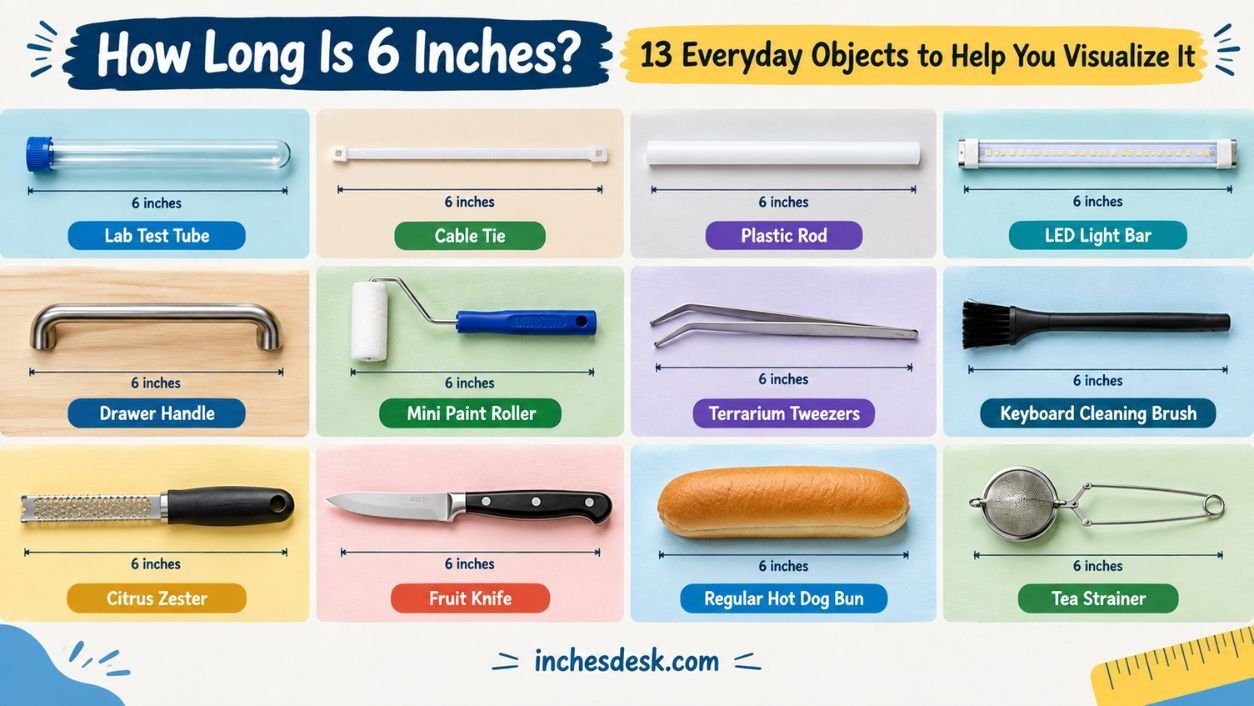
6 inches is equal to 15.24 centimeters or 152.4 millimeters. It is exactly half of 1 foot, making it a useful size to recognize for measuring objects, checking dimensions, planning DIY projects, and comparing everyday items.
If you do not have a ruler nearby, visual references can make 6 inches much easier to understand. Common objects such as a jumbo craft stick, cotton swab, test tube, cable tie, drawer handle, and fruit knife can provide practical size comparisons. Keep in mind that everyday objects can vary slightly in length, so they are useful for estimation rather than precision measurement.
6 Inches Conversion Table
| Measurement Unit | 6 Inches Equals |
| Inches | 6 inches |
| Centimeters | 15.24 cm |
| Millimeters | 152.4 mm |
| Feet | 0.5 ft |
| Yards | 0.1667 yd |
| Meters | 0.1524 m |
How to Convert 6 Inches
To convert inches to centimeters, multiply the number of inches by 2.54:
6 × 2.54 = 15.24 cm
To convert inches to millimeters, multiply by 25.4:
6 × 25.4 = 152.4 mm
For feet, divide by 12 because there are 12 inches in 1 foot:
6 ÷ 12 = 0.5 feet
What Does 6 Inches Look Like in Real Life?
6 inches looks roughly like the length of a small ruler segment, a typical fruit knife, or a medium-sized kitchen utensil. Since 6 inches equals 15.24 cm, you can picture it as a little over 15 centimeters from one end to the other. It is also exactly half the length of a standard 12-inch ruler.
A useful way to visualize 6 inches is to imagine the distance from the tip of your thumb to another point on your hand, depending on your hand size. However, hand measurements vary considerably, so this method is best for a quick estimate rather than an exact measurement.
You can also compare 6 inches with familiar objects around your home or workplace. A long cotton swab, small drawer handle, cable tie, or fruit knife may be close to this length. These objects are convenient visual references because you can hold them next to the area you want to estimate.
For accurate work, such as cutting materials, installing hardware, or checking product dimensions, use a ruler or measuring tape. Everyday objects can differ from their advertised or typical dimensions, so they should only be treated as approximate 6-inch references.
Everyday Objects That Are About 6 Inches Long
Jumbo Craft (popsicle) Stick

A jumbo craft stick is a convenient reference for visualizing a length close to 6 inches. Standard craft sticks are often shorter, while larger or jumbo versions can approach this size.
Because they are straight, flat, and easy to handle, they are also useful for simple school projects, model making, and DIY measurements. If you have one available, placing it beside a ruler can help you see how its length compares with exactly 6 inches.
Lab Test Tube

A small laboratory test tube can have a body length close to 6 inches, depending on its capacity and manufacturer.
Test tubes are useful visual references because they are long, narrow objects with a clearly defined top and bottom. When comparing one with a 6-inch measurement, measure the actual tube rather than assuming every test tube has the same dimensions.
Plastic Rod
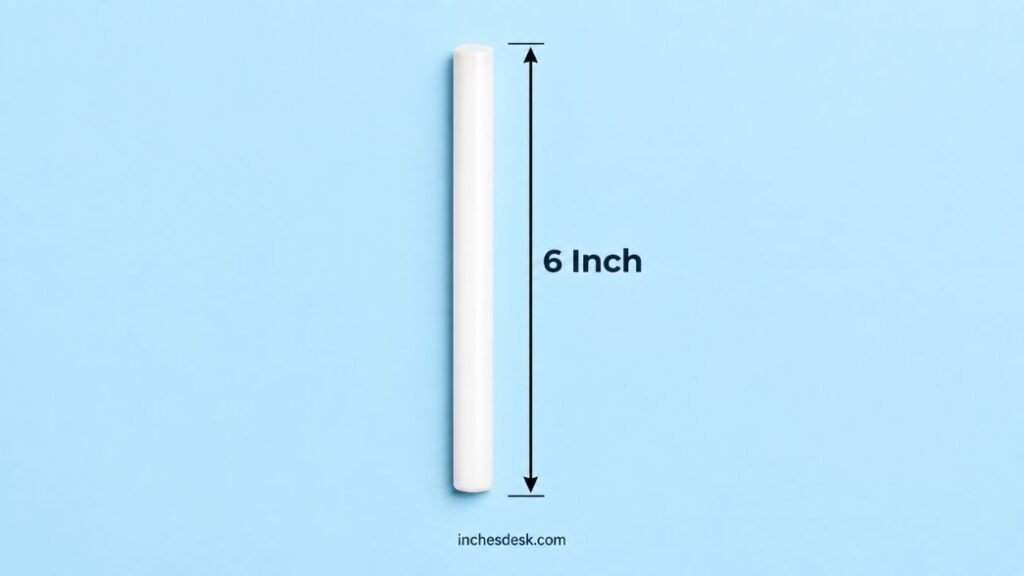
A short plastic rod measuring about 6 inches provides a simple, straight-line comparison. Plastic rods are used for crafts, educational models, DIY projects, and small construction tasks.
Because the rod is usually uniform in thickness, its overall length is easy to compare with a measuring tape or ruler. A 6-inch rod would extend just over 15 centimeters.
LED Light Bar
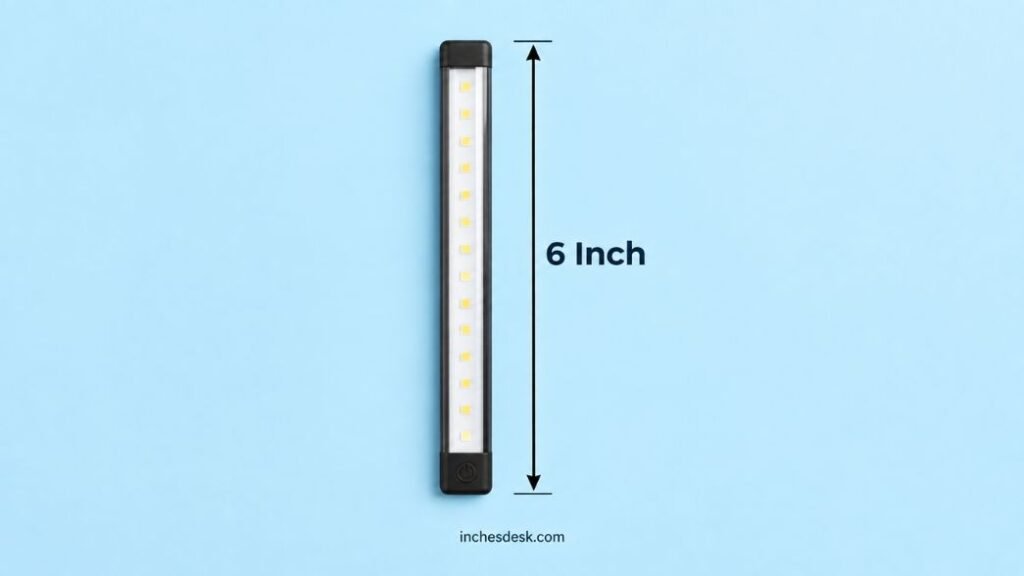
A compact LED light bar may be approximately 6 inches long, particularly models designed for cabinets, shelves, displays, or small work areas.
Light bars come in many different sizes, so this is an approximate reference rather than a universal dimension. If a product specification lists its length as 6 inches, you can picture it as a little longer than 15 centimeters from one end to the other.
Drawer Handle

A drawer handle can provide a useful reference for 6 inches because many cabinet and furniture handles are designed around compact, easy-to-grip dimensions.
However, handle measurements can be listed in different ways, such as overall length or the distance between mounting holes. When comparing one with 6 inches, make sure you are measuring the full handle length rather than the mounting-hole spacing.
Mini Paint Roller
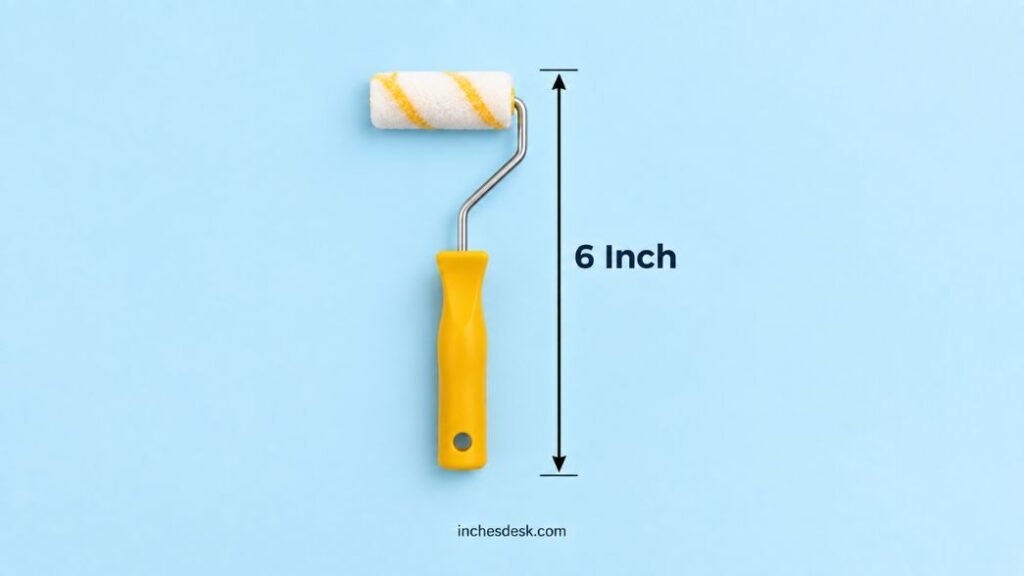
A mini paint roller is another practical object that can approach 6 inches in overall length. Small rollers are commonly used for cabinets, furniture, trim, crafts, and narrow surfaces.
Their handles and roller sleeves vary in size, so not every mini roller will be exactly 6 inches. Still, a compact roller can give you a useful sense of how long 6 inches looks in a real workshop or DIY setting.
Terrarium Tweezers

Long terrarium tweezers can be close to 6 inches in length and are designed for placing or adjusting small plants, moss, stones, and decorations inside containers.
Their extended shape makes them easy to compare with a 6-inch ruler. Because terrarium tweezers are available in different lengths, check the product dimensions if an exact measurement is required.
Keyboard Cleaning Brush
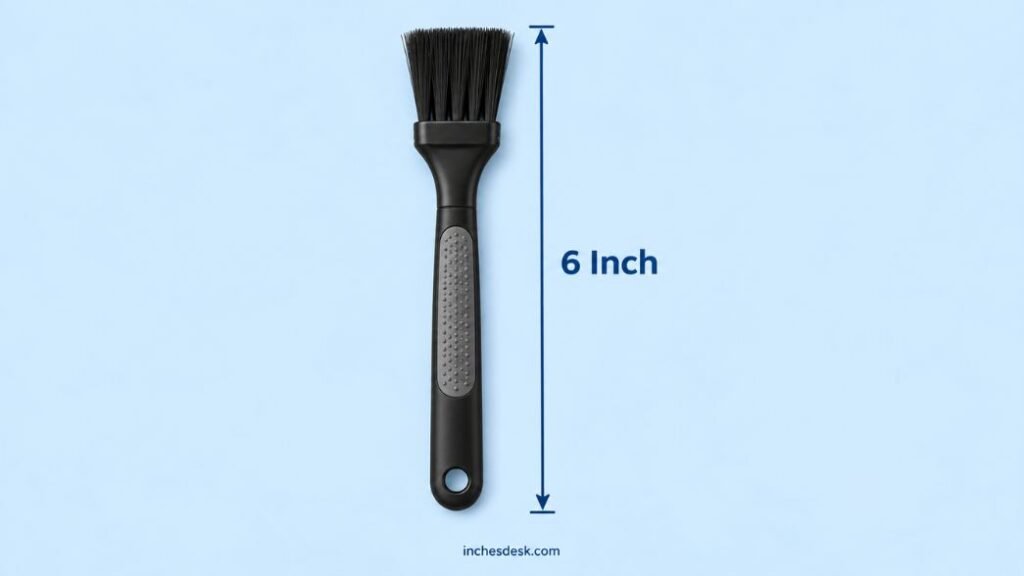
A small keyboard cleaning brush may measure around 6 inches from the end of its handle to the tip of its bristles.
These compact brushes are designed to fit comfortably in the hand while reaching between keys and into small gaps. The length can vary considerably between models, but a 6-inch brush gives you a useful everyday reference for this measurement.
Citrus Zester

A citrus zester with a compact handle can be roughly 6 inches long. These kitchen tools are designed to remove the outer zest from lemons, limes, oranges, and other citrus fruits.
Since the handle, grating surface, and overall shape differ between designs, the exact length is not universal. Still, a 6-inch zester is a convenient example of an object that fits comfortably in one hand.
Fruit Knife
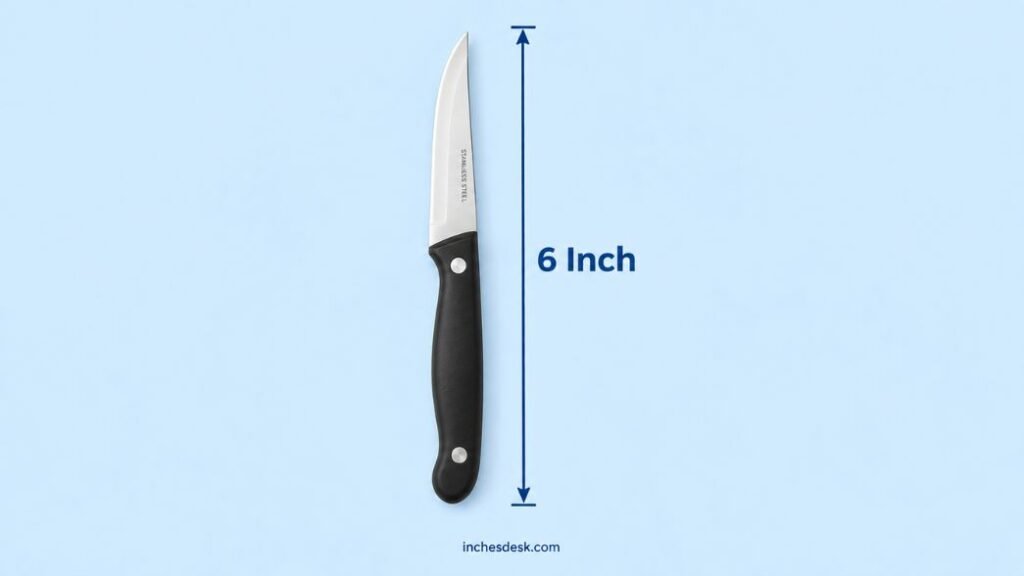
A small fruit knife can be approximately 6 inches long, particularly when measuring the entire knife rather than just the blade.
Kitchen knives come in many sizes, so the blade length and total length should not be confused. A knife with a total length near 6 inches provides a familiar visual reference for a distance of 15.24 cm.
Regular hot dog bun

A regular hot dog bun can be close to 6 inches long, although bakery and packaged versions vary. Its elongated shape makes it an easy object to visualize from one end to the other.
When using a bun as a size comparison, remember that its length can change slightly because of the baking process, packaging, and brand.
Tea Strainer

A compact tea strainer may be around 6 inches long when its handle and straining section are measured together.
Longer-handled strainers are designed to reach into mugs, cups, and teapots without requiring you to hold the straining basket directly. Because different styles have different handle lengths, use the actual item for an approximate comparison.
Bottle Opener
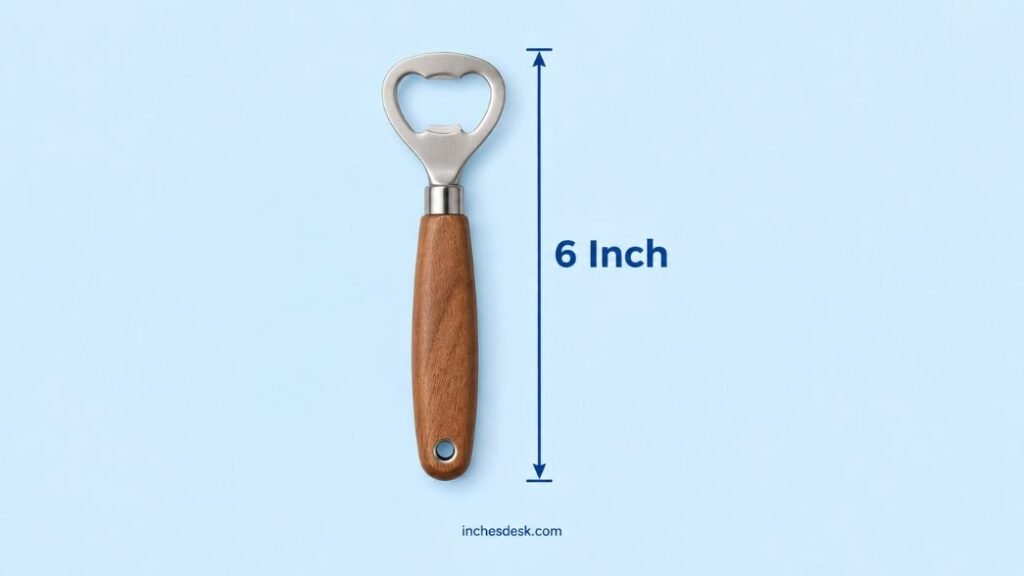
A bottle opener can also be close to 6 inches long, especially larger handheld designs intended for comfortable gripping. Compact openers may be considerably shorter, while bar-style openers can be longer. A 6-inch bottle opener gives you a useful reference because its straight overall profile makes the length easy to estimate visually.
These examples show that 6 inches is a fairly compact but noticeable length. It is long enough to span many small household and workshop objects, yet short enough to fit comfortably in one hand. For the most accurate comparison, remember the key conversion: 6 inches = 15.24 centimeters = 152.4 millimeters.
Quick Comparison Table of 6-Inch Objects
The following table provides a quick way to compare everyday objects that can be close to 6 inches (15.24 cm). Since manufactured products and natural items vary in size, these examples should be treated as visual references rather than exact measurements.
| Everyday Object | Approximate Length | How It Helps Visualize 6 Inches |
| Jumbo craft (popsicle) stick | Around 6 inches | Straight, narrow reference |
| Long sterile cotton swab | Around 6 inches | Easy end-to-end comparison |
| Lab test tube | Around 6 inches | Tall, narrow reference |
| Cable tie | 6 inches | Direct size reference when labeled |
| Plastic rod | Around 6 inches | Simple straight-line comparison |
| LED light bar | Around 6 inches | Compact household reference |
| Drawer handle | Around 6 inches | Familiar furniture hardware |
| Mini paint roller | Around 6 inches | Useful DIY/workshop comparison |
| Terrarium tweezers | Around 6 inches | Long, narrow hand tool |
| Keyboard cleaning brush | Around 6 inches | Compact desk accessory |
| Citrus zester | Around 6 inches | Familiar kitchen tool |
| Fruit knife | Around 6 inches | Easy handheld comparison |
| Regular hot dog bun | Around 6 inches | Elongated food reference |
| Tea strainer | Around 6 inches | Kitchen utensil comparison |
| Bottle opener | Around 6 inches | Compact handheld tool |
How to Measure 6 Inches Without a Ruler
You can estimate 6 inches without a ruler by using familiar objects, your hand, or a standard sheet of paper as a reference. Since 6 inches equals 15.24 cm, the goal is to find a known length that is close to 15 centimeters and compare it with the object you want to measure.
Use Half of a 12-Inch Ruler
If you have a standard 12-inch ruler but do not want to use the full ruler for comparison, half its length is exactly 6 inches. This is one of the simplest visual references because 6 inches is precisely one-half of 12 inches.
Use a Standard 6-Inch Object
Look around your home or workspace for an item whose packaging or specifications state that it is 6 inches long. A 6-inch cable tie, craft item, tool, or similar object can serve as a reusable reference. Place the known object beside the item you are estimating and compare their end points.
Estimate With Your Hand
Your hand can provide a rough measurement, although hand sizes differ from person to person. For some people, the distance from the tip of the thumb to another part of the hand may approach 6 inches when the hand is fully extended. Measure your hand once when you have access to a ruler, then remember the result for future estimates.
Use a Sheet of Letter Paper
A US Letter sheet measures 11 inches × 8.5 inches. Its shorter side is therefore longer than 6 inches, but you can visually estimate 6 inches as about three-quarters of the 8.5-inch width. This method is useful when paper is readily available, although it is not precise enough for detailed DIY work.
Use the 15-Centimeter Reference
Because 6 inches = 15.24 cm, you can use a 15-centimeter object as a close approximation. The difference is only 0.24 cm, or 2.4 mm. A 15 cm ruler or marked object therefore gives you a very close visual estimate of 6 inches.
Compare With Everyday Objects
Several small objects can help you develop a mental picture of 6 inches. A long cotton swab, small kitchen utensil, drawer handle, or compact tool may be close to this length. Place the object next to the item you want to estimate and compare the overall lengths.
For casual estimates, these methods can work well. However, do not rely on an object or hand measurement when accuracy matters. Cutting wood, installing hardware, measuring fabric, drilling holes, or checking product dimensions should be done with an actual ruler, tape measure, or other appropriate measuring tool.
Real-Life Situations Where 6 Inches Matters
A difference of 6 inches can make a noticeable difference when measuring, fitting, cutting, or arranging objects. Because 6 inches equals 15.24 cm, recognizing this length can be useful in DIY projects, home organization, shopping, crafting, cooking, and technical work.
DIY and Home Improvement
Six inches is a useful reference when planning small home improvement projects. For example, you may need to estimate the length of a piece of trim, the position of a small bracket, or the spacing between objects. A rough understanding of 6 inches can help you visualize the layout before taking an exact measurement.
For cutting materials such as wood, plastic, foam, or fabric, however, use a measuring tool rather than relying on visual estimation. Even a small measurement error can affect how well two pieces fit together.
Furniture and Hardware
Cabinet handles, drawer pulls, hooks, brackets, and other hardware often come in compact dimensions. Knowing what 6 inches looks like can help when comparing products online or deciding whether a particular item will fit a small space.
Pay attention to whether a product’s listed measurement refers to its total length, mounting-hole spacing, or another dimension. These measurements are not always interchangeable.
Crafting and School Projects
Students and crafters frequently work with short pieces of paper, sticks, wire, string, foam board, and other materials. Six inches is a convenient size to recognize because it is long enough for many small projects while remaining easy to visualize.
For example, when a craft instruction calls for a piece approximately 6 inches long, having a familiar reference can help you make a quick estimate before making the cut.
Shopping for Household Items
Product dimensions are especially useful when shopping online. If a listing says an item is 6 inches long, you can picture it as 15.24 cm, or half the length of a standard 12-inch ruler.
This can help prevent a common shopping mistake: confusing a small product’s advertised length with its overall size. Always check the complete dimensions when available, especially if width and height also affect whether the item will fit.
Kitchen and Food Preparation
Six inches can be a useful reference for small kitchen tools and food items. Compact knives, utensils, strainers, and elongated foods can sometimes fall near this length. Knowing the approximate size helps you judge whether an item will fit inside a drawer, container, utensil holder, or storage area.
When dealing with food portions, remember that natural and baked items vary in size. A 6-inch food item should therefore be treated as an approximate visual comparison unless it has been measured.
Measuring for Storage
Storage spaces often require careful size comparisons. A shelf, drawer, container, or organizer with only a few inches of available space may not accommodate an item that is 6 inches long.
Before buying an organizer or placing an object into a tight space, measure the available length directly. The 6-inch reference is useful for visualization, but an exact measurement is safer when the fit matters.
Photography and Small Equipment
Small photography accessories, lighting components, mounts, and other equipment can have dimensions around several inches. Understanding 6 inches helps you quickly judge the approximate scale of an accessory when reading product specifications.
This is particularly helpful when comparing several products with similar names but different physical dimensions.
Why 6 Inches Is Useful to Recognize
The main advantage of recognizing 6 inches is faster visual estimation. You do not need to measure every small object precisely when you simply want to understand its approximate size. Remembering that 6 inches is half a foot and 15.24 cm gives you two convenient reference points.
For any task where precision affects the final result, use the visual estimate only as a starting point and confirm the measurement with an appropriate measuring tool.
DIY: Make Your Own Printable 6-Inch Ruler
You can make a simple 6-inch reference ruler at home by creating a straight line that measures exactly 6 inches (15.24 cm) when printed at its intended scale. This can be useful for quick size comparisons, crafts, school projects, and checking small objects.
The key is to make sure your printer does not resize the document automatically. A printable ruler is only useful as a measurement tool if the printed scale is accurate.
Simple 6-Inch Ruler Layout
Create a horizontal line measuring exactly 6 inches in your document or graphics program. Add measurement marks at regular intervals, such as every 1 inch or every 0.5 inch.
A basic layout could look like this:
0 in ┃ 1 in ┃ 2 in ┃ 3 in ┃ 4 in ┃ 5 in ┃ 6 in
For a metric version, the complete length should be 15.24 cm.
Printing the Ruler Correctly
When printing your ruler, select Actual Size, 100% Scale, or an equivalent setting. Avoid options such as Fit to Page, Shrink to Fit, or automatic scaling because these can change the printed dimensions.
After printing, verify the result against a known measuring tool if accuracy matters. Measure from the 0-inch mark to the 6-inch mark rather than simply judging the overall appearance of the printed page.
Make It More Durable
For repeated use, print the ruler on thicker paper or cardstock. You can also place clear protective tape over it or laminate it after confirming that the printed measurements are correct.
A durable 6-inch reference can be kept near a desk, craft area, workshop, or measuring supplies for quick comparisons.
Important Accuracy Tip
A printable ruler should not automatically be assumed to be accurate just because the digital design says 6 inches. Printers and PDF viewers can apply scaling during the printing process.
The most reliable approach is:
- Create a 6-inch (15.24 cm) measurement line.
- Print at 100% or Actual Size.
- Check the printed line with a reliable ruler.
- If the measurement is incorrect, check the printer or document scaling settings.
- Use the printed ruler only after confirming its scale.
For precision work such as woodworking, construction, sewing, or installation, use a properly manufactured ruler or tape measure instead of relying on a homemade printable version.
Conclusion
6 inches is equal to 15.24 centimeters, 152.4 millimeters, and exactly half a foot. Once you connect this measurement with familiar objects, it becomes much easier to visualize without reaching for a ruler every time.
A jumbo craft stick, long cotton swab, cable tie, small kitchen tool, drawer handle, or other compact object can provide a useful visual reference for approximately 6 inches. These comparisons are helpful for everyday estimating, shopping, crafting, DIY planning, and understanding product dimensions.
For quick estimates, you can also use your hand, a known 6-inch object, or the 15-centimeter mark as a reference. However, everyday objects are not guaranteed to have exact dimensions. Whenever accuracy matters, confirm the measurement with a ruler or measuring tape.
The easiest facts to remember are simple: 6 inches = 15.24 cm = 152.4 mm = 0.5 foot. Keeping these conversions in mind gives you a practical mental picture of this common measurement.
FAQs About 6 Inches
How long is 6 inches in cm and mm?
6 inches equals 15.24 centimeters and 152.4 millimeters. To convert inches to centimeters, multiply by 2.54: 6 × 2.54 = 15.24 cm. To convert inches to millimeters, multiply by 25.4: 6 × 25.4 = 152.4 mm.
What does 6 inches look like?
6 inches looks like a little more than 15 centimeters and is exactly half the length of a 12-inch ruler. Depending on the product, objects such as a long cotton swab, compact kitchen tool, cable tie, or small handle can provide a similar visual reference.
Is 6 inches big or small?
6 inches is generally considered a relatively small length for many everyday objects, but it is large enough to be noticeable and useful for measuring. It is exactly half a foot, or 15.24 centimeters. Whether it seems large or small depends on what you are measuring.
How can I measure 6 inches without a ruler?
You can estimate 6 inches by using a known object of similar length, half of a 12-inch ruler, or a 15-centimeter reference. Your hand can also provide a rough estimate after you have calibrated your hand span against a ruler. These methods are suitable for approximate measurements, not precision work.
How does 6 inches compare to a foot?
6 inches is exactly half of 1 foot. Since 1 foot contains 12 inches, the calculation is 6 ÷ 12 = 0.5 foot. You can therefore think of 6 inches as one-half of a standard 12-inch length.
Can I use my hand to estimate 6 inches?
Yes, you can use your hand to estimate 6 inches, but the result will vary because hand sizes are different. For a more reliable personal reference, measure your hand with a ruler once and identify a repeatable distance that is close to 6 inches. Use that measurement for future quick estimates rather than assuming everyone’s hand is the same size.
